Pakistan targets Chinese solar investment
PCI conference draws lessons from ASEAN’s manufacturing success
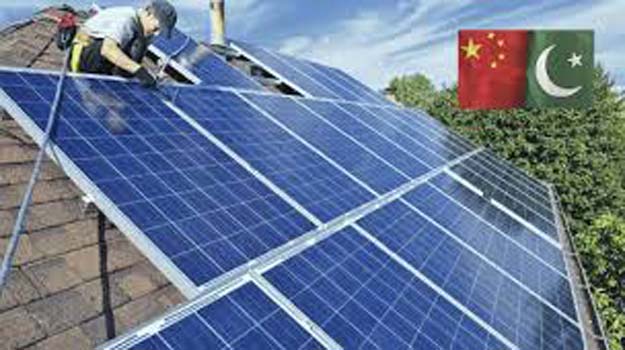
ISLAMABAD: The Pakistan-China Institute (PCI), under the umbrella of the Green CPEC Alliance, hosted a pivotal regional conference titled “ASEAN-to-Pakistan Pathways: Attracting Chinese Investment for Solar PV Value-Chain Manufacturing.” The event brought together top policymakers and regional experts to analyze Southeast Asia’s successful integration into the global solar supply chain and develop a concrete framework to attract similar Chinese investment to Pakistan.
With Pakistan experiencing an unprecedented solar demand shock, the conference aimed to move the country from being a major importer of solar technology to a competitive manufacturing hub.
A Strategic Window for Solar Manufacturing
In his welcome address, Mustafa Hyder Sayed, Executive Director of the Pakistan-China Institute, set the stage by outlining the global shifts reshaping solar investment. He highlighted the rebalancing of manufacturing post-tariff adjustments in ASEAN and China’s strategic push for overseas cleantech. “Countries are now competing for mobile solar investment by combining strong industrial policy with credible delivery capacity,” he stated. “Our goal is to translate ASEAN’s practical experience into actionable lessons for Pakistan, focusing on what makes a project truly bankable: policy clarity, ready-to-use Special Economic Zones (SEZs), and seamless execution.”
Pakistan’s Solar Boom: A Once-in-a-Generation Opportunity
Delivering the keynote address, Senator Mushahid Hussain Sayed, Chairman of the Pakistan-China Institute, underscored the sheer scale of Pakistan’s solar adoption. He revealed staggering import figures, noting that Pakistan imported approximately 17 GW of solar panels in 2024 and 17.9 GW in FY25, pushing total imports beyond 50 GW by September 2025. Consequently, Pakistan’s share of China’s solar exports soared to about 12% in 2025, up from just 2% in 2022.
“Solar energy is no longer an alternative; it is a cornerstone of our energy security,” Senator Mushahid Hussain Sayed said, noting that solar provided over 25% of Pakistan’s utility electricity between January and April 2025. He framed China’s affordable solar technology as a strategic window of opportunity, driven by global installations reaching 597 GW in 2024 and module prices falling to as low as $0.07 per watt. He linked this growth to broader geopolitical and resource contexts, citing over 283,000 net-metering consumers and roughly 650,000 solar-powered tube wells, which have implications for water and food security.
From Import Dependency to Industrial Imperative
Dr. Shezra Mansab Ali Kharal, Minister of State for Climate Change, delivered a compelling keynote on “Pakistan’s Solar Demand Shock.” She confirmed the import-dependent nature of this boom, with over 51.5 GW of modules imported from China by November 2025 alone. While solar supplied a quarter of the nation’s electricity, it has also created market distortions like “negative daytime demand” in major cities.
“With module prices falling to around $0.08 per watt, the economics have flipped,” Dr. Kharal explained. “This is no longer just an energy issue; it is a foreign exchange and value-retention imperative. With import costs exceeding $2 billion by June 2025, building a domestic manufacturing base is not just an ambition—it is a necessity for our economic stability.”
Decoding the ASEAN Model for Pakistan
The conference featured in-depth sessions analyzing the factors behind ASEAN’s success in attracting Chinese solar FDI, such as tariff-jumping strategies, trade agreements, and execution speed. Experts emphasized that bankability requires enforceable commitments, not just policy announcements.
Muhammad Umar Farooq, Senior Research Associate at PCI, noted, “ASEAN’s advantage came from combining incentives with execution speed and an export-driven logic. Pakistan’s opportunity depends on sequencing—starting with what is investable now and deepening localization over time. We need a credible policy and execution package to attract the next wave of investment.”
International experts, including Dr. Christoph Nedopil (Griffith Asia Institute) and Lam Pham (Ember), stressed the importance of “invest this year, operate this year” execution, diversified export markets, and a staged industrial approach moving from assembly to higher-value segments like cells and wafers.
Pakistan’s Path Forward: Execution is Key
Pakistani officials acknowledged the domestic challenges. Dr. Erfa Iqbal, Additional Secretary at the Board of Investment, focused on removing bottlenecks in SEZs to make them genuinely “plug-and-play” for investors within a 6-to-12-month timeframe. Meanwhile, Mark Lister of Asia Clean Energy Partners advocated for a stepwise industrial approach, beginning with module assembly and Balance of System (BOS) components, while emphasizing workforce upskilling and SEZ clustering.
The conference successfully bridged the gap between policy vision and commercial reality, providing the Green CPEC Alliance with a clear, evidence-based roadmap to transform Pakistan from a solar consumer into a competitive node in the global solar PV value chain.