India bans 25 books to control narrative on Kashmir
Censorship cannot erase historical truths or collective memory of Kashmiris: Mirwaiz
Monitoring Desk
SRINAGAR: In yet another move to tighten its grip on the Kashmir narrative, the Indian government has banned 25 books in Indian illegally occupied Jammu and Kashmir, branding them a threat to “India’s integrity.”
The banned titles include works by prominent Kashmiri, Indian, and international authors such as Hafsa Kanjwal, Mohammad Yosuf Saraf, Victoria Schofield, Ather Zia, A.G. Noorani, Arundhati Roy, Anuradha Bhasin, Sumantra Bose, Christopher Snedden and Moulana Maududi. The books document lived experiences, resistance movements, and the political aspirations of the Kashmiri people.
The All Parties Hurriyat Conference, civil society members, rights groups, and academics have strongly condemned the ban, terming it a targeted effort to erase Kashmir’s political history and silence authentic voices.
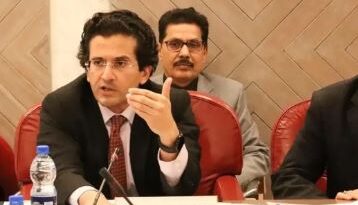
Senior APHC leader Mirwaiz Umar Farooq in a statement issued in Srinagar said censorship of scholarly works cannot erase historical truths or the collective memory of Kashmiris. He said banning such books only exposes New Delhi’s insecurity and its obsession with narrative control. Communist Party of India-Marxist Member of Indian parliament V Sivadasan has called the ban a painful attack on democratic and secular values.
Meanwhile, ahead of India’s Independence Day, the Modi-led regime has tightened restrictions in occupied Jammu and Kashmir. Under the guise of “threat perception,” Indian troops have intensified patrolling and crackdowns in civilian areas .
Separately, RTI data reveals that the Modi regime spent over 700 million rupees on print advertisements between April 2022 and October 2024, mostly benefiting five pro-regime newspapers. Critics say this is part of a larger strategy to promote state-controlled narratives while financially choking independent media.
In Kulgam, Indian forces continued intense cordon and search operations for the seventh consecutive day, using drones, helicopters, and heavy weaponry. Locals reported powerful explosions and intense firing in the area. In political developments, the People’s Democratic Party has reiterated that restoration of Articles 370 and 35A is non-negotiable. The party rejected statehood without special status, calling it a diversion from the core political demand of the Kashmiri people.
In Udhampur district, three Indian CRPF personnel were killed and 15 others injured when their vehicle skidded off the road and plunged into a gorge. Indian police arrest two Kashmiri businessmen in New Delhi under draconian UAPA law.