Govt, scholars hold candid talks on Madrassa reforms at PICSS Roundtable
ISLAMABAD: Government officials and religious scholars engaged in a candid discussion over madrassa reforms at a roundtable hosted by the Pakistan Institute for Conflict and Security Studies (PICSS) at its head office in Islamabad Saturday.
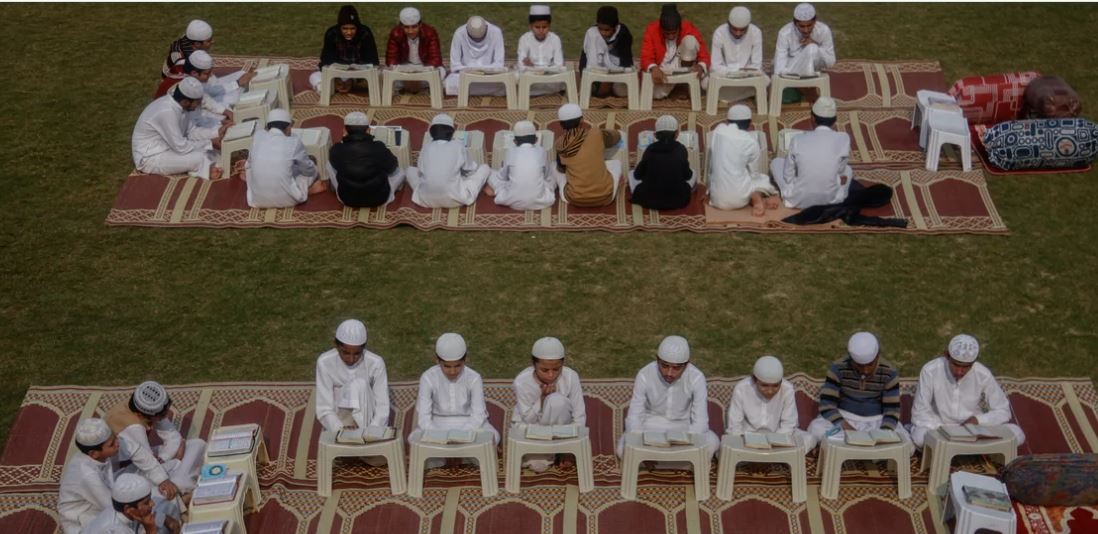
The conference, titled “Mainstreaming of Madrassa Students and Its Impact on Counter-Radicalisation”, brought together senior officials, clerics, and academics to review the government’s efforts to modernise religious seminaries. Major General Dr Ghulam Qamar (R), Director General of the Directorate of Religious Education, Training and Evaluation (DRE), said more than 19,000 madrassas have been registered under a new regulatory framework of DRE.
Modern subjects, including English, Mathematics, and General Science, have been added to the Dars-e-Nizami curriculum, he said, while thousands of students were receiving vocational training in IT, digital marketing, calligraphy, and plumbing.
DG RE Major General (R) Ghulam Qamar said that Ittihad Tanzeem ul Madaris Pakistan (ITMP) and prominent religious leaders, including Mufti Taqi Usmani, Mufti Muneeb, and others, were part of the consultation process that led to the 2019 decision to register Madrassahs with the Ministry of Education, as they are educational institutions.
However, for reasons best known to them, they later withdrew from this arrangement and chose instead to register under the Ministry of Commerce and Industry. He explained that a new law has now been introduced, allowing those who do not wish to register with the Directorate General of Religious Education (DRE) to register with the district registrar.
The government’s ultimate objective, he stressed, is simply to ensure that Madrassahs are registered. He added that the DRE is facilitating Madrassahs in opening bank accounts, resolving visa issues for foreign students, and addressing other legal matters. Major General (R) Ghulam Qamar further revealed that at least two of the five ITMP members are now inclined to work with the DRE rather than remain with the ITMP.
He expressed confidence that the government’s initiative will eventually prevail and rejected the perception that the government aims to control Madrassahs, clarifying that the goal is regulation, not control. He also stated that incidents of violence against students are not limited to Madrassahs, yet when such cases emerge from Madrassahs, they are often exaggerated in the media, which he described as unfair.
He emphasized that Madrassahs play an important role in society and their contributions must be acknowledged. PICSS Managing Director Abdullah Khan argued that madrassa education was a specialised field and skills training should complement, not replace, religious studies. “There is already an exclusive job market for madrassa graduates,” he said.
He warned that the leadership of many religiously motivated militant groups also emerged from such institutions which needs to be focused in any counter radicalisation drive. Molana Abdul Qudus Mohammadi of Ittehad Tanzeem ul Madaris objected to the establishment of 10 additional religious boards (Wafaqs) instead of unifying the existing five recognised Wafaqs.
He criticised the lack of consultation with senior scholars such as Mufti Taqi Usmani and Mufti Muneeb ur Rehman by the government. He also confirmed that the madrassa involved in a recent Swat incident, where a student was allegedly tortured to death, had its registration cancelled and legal action initiated.
The conference was attended by foreigner diplomats, MNAs and other persons related with religious academia field Other speakers, including former Council of Islamic Ideology member Allama Arif Hussain Wahidi, International Islamic University’s Dr Tahir Mahmood, and CII Secretary Dr Ikram ul Haq Yaseen, called for trust-building between the state and religious institutions, addressing governance gaps, and adopting non-sectarian admissions and faculty diversity.
The meeting ended with consensus on incorporating modern skills, English proficiency, and science into madrassa curricula while safeguarding their theological foundations. The event was also attended by Naeem murtaza, members of National Assembly Dr Shazia Somro and Mahjabeen Abbassi. NNI