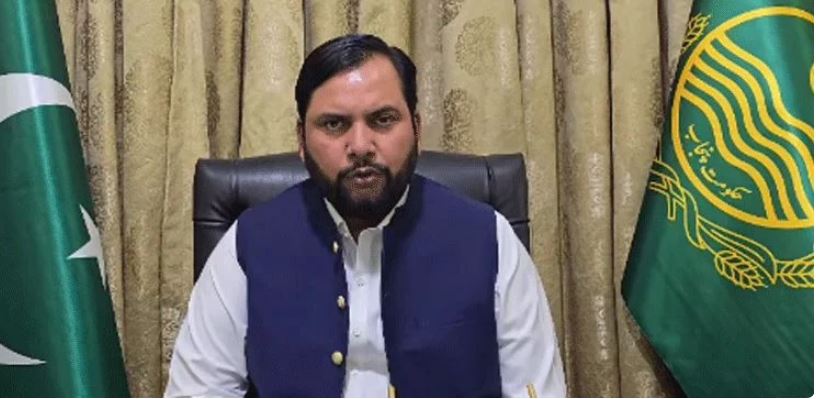
Bill seeking 5-year jail for forced conversions lands in Punjab Assembly
LAHORE: A legislative bill seeking five years in prison for the perpetrators of forced conversions was formally submitted to the Punjab Assembly on Tuesday.
Chairman of the Standing Committee on Minority Affairs, Falbous Christopher, submitted the Punjab Protection of the Rights of Religious Minorities Bill 2026.
The bill will now be referred to the Standing Committee on Minority Affairs, where it will be discussed and reviewed. After this process, the bill can be tabled in the provincial assembly.
Under the proposed bill, perpetrators of forced conversion could face up to five years in prison as it formally defines forced conversion as a criminal offence.
According to the bill, whoever “compels or attempts to compel” a person belonging to a religious minority with threats, undue influence and coercion to change their religion “shall be punishable with imprisonment which may extend to five years and with fine”.
Voluntary conversions without such pressure were excluded.
The bill also empowers the judiciary to take proactive measures in cases of forced marriages, granting them the authority to issue protection orders, “in accordance with the applicable marriage, child protection and guardianship laws”.
The bill addresses forced marriages involving minorities, requiring court inquiries and protective orders, with marriages only voided by court order.
The bill calls for a review of the educational curriculum for “identifying material that promotes hatred, discrimination or tolerance against religious minorities”.
It also establishes a strict legal prohibition against religious bias in employment and the delivery of public services, while also mandating the physical protection of minority religious sites and properties.
“No person shall damage, desecrate or unlawfully occupy any place of worship or religious property belonging to a religious minority,” the bill states.
Offences motivated by religious hatred are deemed aggravated, as per the bill, with courts considering religious motivation during sentencing.
Offences under the proposed law are cognisable and triable under criminal procedure, with courts mpowered to protect victims and witnesses.
While the bill has been hailed as a landmark achievement, advocates emphasise that legislative victory is only the first step toward genuine safety.
Pakistan’s sole Christian senator, Khalil Tahir Sandhu, echoed these sentiments by highlighting that the proposed legislation finally reflected the constitutional promise of equality. He described the move to address forced conversions through a legal framework as a long-overdue necessity. According to Sandhu, the collective responsibility now shifted to parliamentarians and government institutions to ensure that enforcement was rigorous enough to allow every citizen to live with the dignity and freedom promised by the state. Staff Report