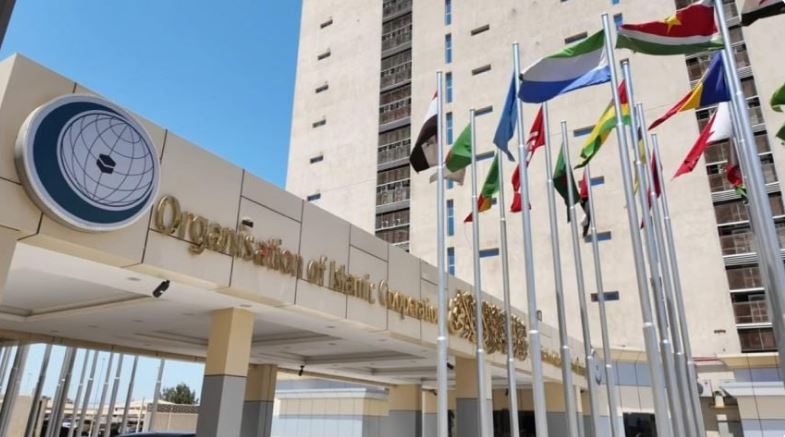
OIC slams Israeli law permitting execution of Palestinian prisoners
JEDDAH: The Organisation of Islamic Cooperation (OIC) on Tuesday strongly condemned the approval of a law by the Israeli parliament allowing the execution of Palestinian prisoners, calling it a “dangerous and unprecedented step” that violates international law.
In a statement issued from Jeddah, the OIC general secretariat said the legislation “grants a licence for murder and political execution against the Palestinian people,” warning that it contravenes international humanitarian law, including the Fourth Geneva Convention and the International Covenant on Civil and Political Rights.
The organisation also raised alarm over the conditions faced by Palestinian detainees in Israeli prisons, stating they are subjected to “torture, ill-treatment, humiliation, terror, rape and starvation,” alongside systematic deprivation of basic human rights.
It described the measure as part of a broader pattern of violations linked to what it termed ongoing “genocide” in Gaza and the West Bank, including occupied Jerusalem.
The OIC called on the international community, including the United Nations, human rights bodies, and the Inter-Parliamentary Union, to take “necessary measures” to hold Israel accountable and pressure it to repeal the law. It further urged immediate steps to ensure the protection of Palestinian prisoners and work towards their release.
The humanitarian crisis in Gaza remains acute, with the enclave facing severe shortages of food, medicine, water and electricity amid continued conflict and blockade by Israel.
Despite temporary pauses in violence and international diplomatic efforts aimed at easing the crisis, large segments of Gaza’s population continue to endure instability, displacement and critical shortages, making sustained humanitarian relief and a comprehensive ceasefire urgent priorities for the region.
The OIC works to promote solidarity among its members, safeguard their sovereignty, and coordinate on political, economic, social, and cultural issues affecting the Islamic world. It also plays a key role in addressing humanitarian crises, mediating conflicts, and advocating for the rights of Muslims worldwide, including the Palestinian cause.
Last year in August in its 21st Extraordinary Session of the Council of Foreign Ministers in Jeddah, the OIC strongly condemned Israel’s actions in Gaza, particularly its plan to seize Gaza and expand military operations into civilian areas.
The body highlighted the humanitarian catastrophe unfolding in the region, noting that Gaza has reached “catastrophic hunger” levels, with a quarter of the population facing severe starvation and hundreds of deaths, including children.
The OIC demanded an immediate, comprehensive cessation of Israeli aggression, calling for an end to forced displacement, illegal settlement expansion, and violations against civilians and infrastructure in Gaza, the West Bank, and East Jerusalem.
The session also urged full international support for the United Nations Relief and Works Agency (UNRWA) to sustain millions of Palestinians dependent on its services. Member states were called upon to remain united in protecting Islamic and Christian holy sites from unilateral actions and to push for accountability for war crimes.
Through these resolutions, the OIC reaffirmed its backing for a permanent, unconditional ceasefire, insisting on unhindered humanitarian access and mobilising global support to safeguard Palestinian rights, self-determination, and the survival of Gaza’s besieged population. Staff Report