China-Pakistan academic cooperation drives innovation in water-efficient agriculture
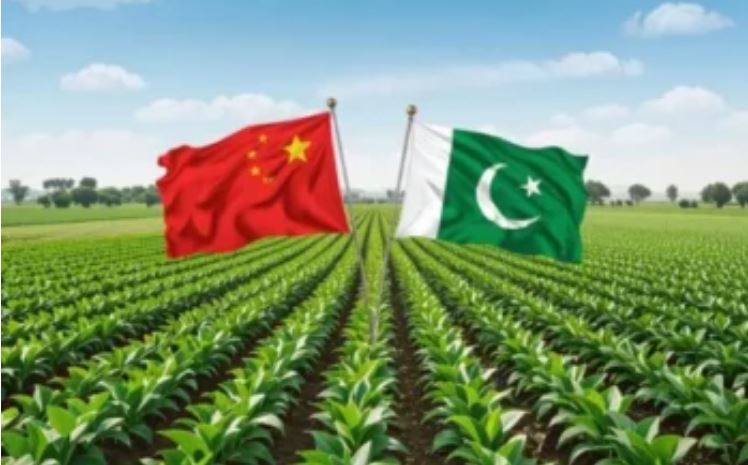
YANGLING: As climate change and water scarcity continue to challenge agricultural productivity, China-Pakistan academic cooperation is emerging as a vital driver of innovation in water-efficient farming.
At Northwest A&F University in Yangling, Pakistani scholar Imran Baloch is gaining access to advanced research facilities and cutting-edge biotechnology, equipping them with the tools to develop drought-resilient crops and sustainable agricultural solutions tailored to Pakistan’s arid and semi-arid regions.
The challenge is particularly acute in Pakistan, where approximately 75 to 92 percent of the national territory is classified as arid or semi-arid.
These conditions extend from the drought-affected expanses of Balochistan, Pakistan’s largest province, to the southern districts of Punjab—the country’s agricultural heartland—which increasingly face water scarcity.
Similar challenges also affect large areas of Sindh and parts of Khyber Pakhtunkhwa. For farmers across these regions, every drop of water counts, and every crop variety must be resilient. “I think my major is very important for Pakistani agriculture,” says Imran Baloch.
To address this, Imran is mastering an impressive suite of cutting-edge plant science techniques at Northwest A&F University, including gene cloning, CRISPR/Cas9, RNAi, Dual-Luciferase Assay, BiFC Assay, and subcellular localization assay. “There are many techniques to edit genes. We modify the genetic structure of the plant, and then we grow that plant and experiment with different techniques to help arid and semi-arid regions,” he explains.
His research focuses on crops such as canola and alfalfa—the former essential for Pakistan’s edible oil supply and the latter for animal fodder. “Protein-protein interactions, mutant preparation, transgenic plant preparation—we study these techniques because they are crucial for Pakistan to get more yield from these crops against drought or salinity stress. China is very advanced in all these areas and is doing excellent research.”Baloch believes he has found the ideal place to pursue this mission.
Yangling is not merely a university town; it is China’s sole Agricultural High-tech Industrial Demonstration Zone. Crucially, it carries a national mandate to promote agricultural modernization in arid and semi-arid regions—a mission that aligns directly with Pakistan’s climatic realities.
The zone hosts the Yangling Agricultural Hi-tech Fair (CAF), one of China’s four major technology exhibitions, and is also home to the Demonstration Base for Agricultural Technology Exchange and Training among SCO countries.
“I feel very fortunate,” Baloch says. “I am still amazed by the high-tech labs. Every instrument you need is available in Chinese universities.” He is equally impressed by the strong university-enterprise collaboration that characterizes the Yangling model. “The university integrates very well with companies. We get support from enterprises, which allows us to focus on our research without being restricted by other things.”
That integration extends beyond the lab and into the field. While some of his classmates have visited agricultural exhibitions, Baloch has explored farmland just four to five kilometers from the university. “I saw various crops—tomatoes, kiwis, wheat, grapes,” he recalled.
“The fields were beautiful, a very productive agricultural area. China is working to create more agricultural production zones. I think this is a very helpful initiative.”Before coming to China, Baloch often heard people in Pakistan—from all walks of life, including those without formal education—discuss the China-Pakistan Economic Corridor (CPEC). Now, having experienced the learning opportunity firsthand, he feels a personal connection to the program’s impact. “After coming here and getting these opportunities, I truly understand. I am one of those really influenced by the program,” he says.
His personal journey is part of a much larger story of collaboration. Northwest A&F University and Yangling have cultivated deep ties with Pakistan over the years, spanning talent development, joint research, technological outreach, and industrial cooperation. Since 2007, the university has trained 844 Pakistani students, including 449 doctoral graduates, China Economic Net reported. As he advances his research, Imran hopes to contribute to this continuing legacy. “I hope that in the future, I will have the opportunity to participate in collaborations between our university and Pakistan, and in other China-Pakistan agricultural science and technology projects,” he says. APP