Pakistan vows to ‘eradicate terrorism’ as Afghan truce nears end
DPM Dar indicates country’s approach to Afghanistan conflict had not changed
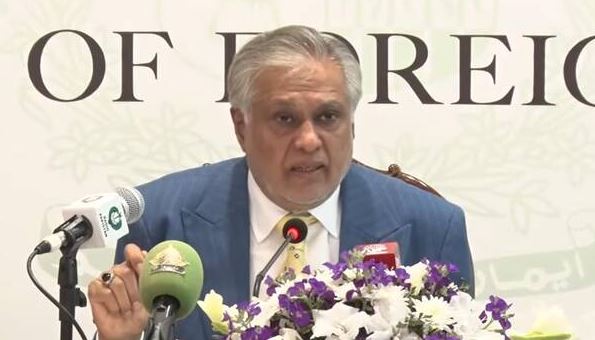
ISLAMABAD: Deputy Prime Minister and Foreign Minister Ishaq Dar on Monday said that the country remains committed to “eradicating the menace of terrorism”, as the clock ticked down to the end of a temporary ceasefire with Afghanistan.
The statement comes as the Pakistan Army responded to the Afghan Taliban’s unprovoked attacks, resulting in the killing of more than 700 Taliban operatives and banned Tehreek-e-Taliban Pakistan (TTP) militants and the destruction of several important Afghan infrastructure.
But in a message to mark Pakistan Day, Dar indicated that the country’s approach to the conflict had not changed.
“Pakistan remains firmly committed to eradicate the menace of terrorism,” he said in a statement. “Pakistan´s actions inside Afghanistan… are directed towards this goal.”
Separately, Prime Minister Shehbaz Sharif said military action inside Afghanistan was “a symbol of our national resolve against terrorism”.
“We will not allow any harm to the peace and security of our country,” he added.
The recent escalation of tensions between Pakistan and Afghanistan follows Pakistan’s retaliatory actions in response to suicide bombings in Islamabad, Bajaur, and Bannu, all of which were traced back to militants based in Afghanistan.
Islamabad, which has repeatedly urged Kabul to prevent its soil from being used by terrorist organisations to carry out attacks, conducted intelligence-based strikes targeting seven terrorist camps and hideouts belonging to Fitna al Khawarij (FAK) — a term used for the banned Tehreek-e-Taliban Pakistan (TTP) — its affiliates and the Daesh-Khorasan, along the Pakistan-Afghanistan border last week.
The recent border tensions reignited months after the two countries agreed to a ceasefire in October 2025 when the Afghan Taliban regime opened unprovoked gunfire at several border points.
The Afghan forces’ firing was aimed at helping Khawarij formations cross the border into Pakistan.
Islamabad, however, back then had agreed to an initial ceasefire at Kabul’s request. The countries then later reached a ceasefire deal in Qatar, which was mediated by Doha and Turkiye.
Under the agreement, terrorism from Afghanistan on Pakistani soil was to be stopped immediately.
The two sides then further held follow-up discussions in Turkiye which did not deliver the desired results due to stubbornness from the Afghan side, as Kabul used the Istanbul talks to malign Pakistan rather than address Islamabad’s core concern of terrorism emanating from Afghan soil. Staff Report