SCCI calls for imposition of ‘Energy Emergency’ to protect KP industry amid ME crisis
PESHAWAR: Sarhad Chamber of Commerce and Industry (SCCI) urged the government to impose “Energy Emergency” amid escalating Middle East crises, stating that the conflict poses an existential threat to Pakistan’s fragile economic recovery and the export-oriented Industrial base of Khyber Pakhtunkhwa.
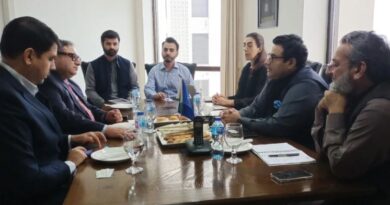
President SCCI, Junaid Altaf, senior vice president Muhammad Nadeem and vice president Sabir Ahmad Bangash along with executive committee in a joint statement here on Wednesday asserted that the compounding burden of regionally uncompetitive petroleum prices and a restrictive monetary regime is pushing the domestic cost of doing business toward a breaking point.
Senior office bearers highlighted a widening disparity between Pakistan and its regional trade competitors, noting that while neighboring economies maintain accommodative, single-digit interest rates, Pakistani industries are being stifled by a 10.5 per cent policy rate.
The high cost of borrowing, coupled with the recent exorbitant Rs.55 per litre hike in petroleum prices, has effectively crippled the capital investment and stalled industrial modernization across the province, said Junaid Altaf, president of the chamber.
The repeated increases in petroleum levies are inflating the cost of captive power generation, leaving exporters with severely eroded margins in an increasingly unforgiving global market, he observed.
The SCCI chief while talking about the vulnerabilities in the national energy supply chain expressed serious concerns over Pakistan’s heavy reliance on Gulf energy imports, specifically crude oil and Liquefied Natural Gas (LNG) from Saudi Arabia, the UAE, and Qatar.
President Junaid Altaf warned that any further maritime disruption would trigger a catastrophic cost-of-living crisis and jeopardize the manufacturing sector’s energy security.
Critically, the SCCI chief pointed out to the skyrocketing freight costs, which, according to him, have spiked by 300 per cent due to “war-risk” insurance classifications, and noted that the rerouting of shipments is adding up to 20 days to transit times for exports destined for the EU, UK, and US markets.
President Junaid Altaf stressed that the direct linkage of Port Qasim and Karachi Port to Gulf shipping lanes leaves domestic supply chains highly exposed to regional volatility. To mitigate these risks, he added the SCCI joined the national call for a robust framework to enhance Strategic Petroleum Reserves (SPR).
Junaid argued that the current 28-day buffer is insufficient for a prolonged regional conflict, advocating instead for a resilient target of 60 to 90 days of consumption.
He stated that protecting export competitiveness is no longer a choice but a matter of national economic security. SCCI chief urged coordinated action between the State Bank of Pakistan, federal regulators, and the business community to implement targeted policy interventions and exchange-rate protections to cushion the impact of rising imported raw material costs. APP