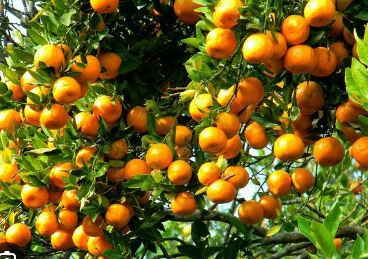
Citrus of KP: The likely casualty of IWT violations by India
PESHAWAR: As the first golden rays of sunlight spread across the fertile plains of Khanpur, 65-year-old farmer Sajid Abbasi quietly walks through his citrus orchard in Haripur district, his mind clouded with worries about water scarcity and the future of his crop amid repeated violations of Indus Water Treaty (IWT) by India.
Moments after offering Fajr prayers, Abbasi joins his sons and brothers to begin loading freshly harvested oranges from their cold storage.
The fruit must reach markets before the sun grows stronger. With only a few days of Ramazan left, demand for citrus has surged across Khyber Pakhtunkhwa as families prepare for iftar gatherings and the approaching Eidul Fitr.
But for Abbasi, the season is no longer just about profits but It has also become a time of uncertainty for many citrus producers following IWT violations by India.
“After Fajr, I come here with my sons to shift oranges to the market early,” Abbasi says, adjusting his white cap while carefully selecting the best fruit. “This crop represents months of work especially watering, pruning and waiting.”
Across the province, juicy citrus fruits especially kinnow have become a staple on iftar tables. Their refreshing taste and nutritional value make them one of the most sought-after seasonal fruits during Iftar.
“My iftar feels incomplete without orange juice,” said Khurshid Khan, a manager at the Pakistan Mineral Development Corporation, while buying fruit at a local market. “It gives strength and energy after a long fast. That’s why I buy two dozen oranges every day.”
For farmers like Abbasi, however, the final weeks of the harvest season bring mixed emotions.
Citrus orchards have quietly emerged as one of the most profitable seasonal crops in parts of Khyber Pakhtunkhwa and Punjab. According to growers, a well-managed acre can generate substantial returns.
“With proper irrigation and good management, a single acre can produce hundreds of kilograms of fruit,” Abbasi explains. “Farmers can earn between Rs500,000 and Rs700,000 per acre if everything goes well, especially the water supply.”
But that “if of IWT violations” has become increasingly troubling for growers.
Abbasi fears that disruptions in river flows linked to repeated violations of the Indus Waters Treaty (IWT) by India could threaten the irrigation system that sustains his orchard.
“We depend largely on water from the River Indus,” he said. “If water becomes scarce, citrus orchards like ours will suffer.”
Farmers across the region share similar concerns. Orchards in districts such as Haripur and Swabi depend heavily on irrigation from the Indus Basin system through Tarbela Dam. Any reduction in water flows could directly affect seasonal crops including wheat, rice, sugarcane and fruits such as melons, strawberries and citrus.
“Water is the lifeline of agriculture,” said Professor Dr. Muhammad Naeem, former chairman of the Economics Department at the University of Peshawar. “If river flows decrease, fruit orchards in districts like Haripur, Swabi, Mardan, Charsadda and Swat could disappear quickly.”
According to the Trade Development Authority of Pakistan (TDAP), the country produces between 2.13 million and 2.4 million metric tons of citrus annually, accounting for nearly 30 to 38 percent of Pakistan’s total fruit production.
More than 90 percent of citrus is grown in Punjab, with the Sargodha region serving as the main hub. Pakistan is also a major global supplier of kinnow mandarin, producing nearly 90 percent of the world’s supply.
The country exports around 440,000 tons of citrus every year, generating roughly 166 million dollars in foreign exchange.
Yet growers say climate change and irregular rainfall are already affecting production.
In Nowshera district, farmer Sajid Khan has been cultivating citrus in his two-acre orchard in Manki Sharif for over a decade. This year, he says, the harvest has been disappointing.
“Normally an acre yields between 700 and 950 kilograms,” he said. “But irregular rainfall and changing weather patterns have reduced production and our daily income.”
Extreme weather events have further increased farmers’ vulnerability. The devastating floods of 2022 in the Kabul and Swat rivers damaged fruit farms in several districts, destroying crops and exposing the fragile nature of seasonal agriculture.
Experts warn that further disruptions in water flows could deepen these challenges.
Tauheedul Haq, former conservator of the Forest Department and an environmental expert, says climate change is already altering rainfall patterns and accelerating glacier melt in northern Pakistan.
“These changes are affecting seasonal crops and fruit production, especially citrus and melons,” he said. “If water flows become unpredictable, orchards as well as crops like wheat and rice in Khyber Pakhtunkhwa, Punjab and Sindh may face severe losses.”
Pakistan relies on the Indus Basin irrigation system for more than 80 percent of its irrigated agriculture, making stable water flows essential for the country’s food security.
Economists also warn that irregular water releases upstream can disrupt Pakistan’s irrigation management.
“When flows fluctuate suddenly, canal operations and reservoir management become difficult,” Professor Naeem explained. “Ultimately, the farmer suffers the most.”
To strengthen water security, experts say Pakistan must accelerate the construction of new dams and reservoirs.
Major projects include the Diamer-Bhasha Dam, expected to generate 4,500 megawatts of electricity, and the Mohmand Dam with a capacity of around 800 megawatts.
Several additional dam sites along the Indus, Swat, Kabul and Kurram rivers have also been identified. While small dams can be completed within two to three years, large reservoirs may take up to 10 to 15 years.
Projections suggest Pakistan could require an additional 76 million acre-feet of water by 2050 to meet growing agricultural and domestic needs.
Back in Haripur, the morning routine continues as Abbasi and his family fill sack after sack with oranges bound for nearby markets.
The rising sun glows over the orchard as workers carefully load the fruit onto a pickup truck.
For Abbasi, citrus is more than a seasonal delicacy—it is the backbone of his family’s livelihood.
“This crop feeds our families,” he said quietly, stretching under the brightening sky.
“We only hope the rivers keep flowing so our fields and orchards remain alive.”
For thousands of farmers across Khyber Pakhtunkhwa and Punjab, the future of Pakistan’s citrus harvest may depend not only on weather and markets, but also on the fate of the rivers that sustain their land. APP