Maryam orders strict enforcement of fire safety regulations across Punjab
CM launches first AI training for Punjab cabinet
Lahore: Punjab Chief Minister Maryam Nawaz Sharif has approved a series of comprehensive measures to prevent fire incidents across the province, directing strict enforcement of safety regulations in commercial and multi-storey buildings.
The decisions were made during a special meeting chaired by the chief minister, here on Tuesday, with commissioners and deputy commissioners participating via video link.
The meeting approved the installation of 1,157 water hydrants across nine divisions and the establishment of a new Fire Inspectorate Unit within Rescue 1122 to strengthen emergency preparedness and oversight.
The chief minister also approved the deployment of modern high-expansion foam generators for fire control and ordered the installation of smoke detectors and CCTV cameras in large buildings. First-aid facilities and oxygen cylinders were declared mandatory in major commercial structures.
Specialised training programmes were approved for markets dealing in chemicals, cardboard, fabric, and gas cylinders to improve readiness for fire emergencies. The chief minister also mandated that every multi-storey building be equipped with water hydrants, and that externally ventilated staircases be installed to ensure safe emergency evacuation.
Expressing grief over the Gul Plaza tragedy in Karachi, Maryam Nawaz Sharif said Punjab stands in solidarity with the Sindh government, the people of Karachi, and the bereaved families, offering all possible assistance.
Referring to a recent fire in Lahore, she noted that around 300 people were present in a 25-storey hotel, praising timely SOPs and Rescue 1122’s response for averting a major tragedy. She commended Director General Rescue Dr Rizwan, who reached the site within five minutes, and said such rapid response must be replicated across the province. The meeting was informed that nearby operational fire hydrants and advanced high-expansion foam technology prevented significant damage.
The chief minister expressed concern over the misuse of emergency exits in commercial buildings and directed strict action against violations. She instructed development authorities to ensure that fire safety regulations are enforced during building construction, and that firefighting equipment and alarms remain functional at all times. She warned against dangling and unsafe electrical wiring, which pose serious fire hazards, especially during rains.
CM Maryam Nawaz ordered a province-wide inspection of gas cylinders and the sealing of companies producing or selling substandard cylinders. She made automatic sprinkler systems mandatory in all buildings. She further directed the removal of encroachments blocking entry and exit points in congested markets, including Lahore’s Shah Alam Market, and mandated monthly mock fire drills in all districts. Compliance with fire drills has been included in the key performance indicators of commissioners and deputy commissioners.

The chief minister emphasized that fire safety measures must be practical and effective, not cosmetic. “Rescue 1122 is a critical institution. We will provide the required equipment, capacity-building, and training resources,” she said.
She also instructed that boilers and flammable materials should never be stored in basements of multi-storey buildings, stressing that loss of life due to negligence is unacceptable. “No worker being burned or killed can be tolerated,” she added.
The chief minister directed that all commercial buildings must install fire hydrants within one month, warning that strict action will follow non-compliance.
Punjab Chief Minister Maryam Nawaz Sharif led the province’s first-ever artificial intelligence (AI) training session for provincial ministers, describing the initiative as the beginning of a new digital era in Punjab.
The chief minister, along with members of the provincial cabinet, participated in an official workshop titled “Empowering Punjab with AI”, here on Tuesday, where experts from Google for Education briefed participants on the practical application of AI tools in governance, policy making, and administrative reforms.
During the session, Maryam Nawaz Sharif declared the use of artificial intelligence mandatory in Punjab’s schools and approved the establishment of a Google Tech Valley Digital Transformation Advisory Board in the province to steer future digital initiatives.
Addressing the workshop, the chief minister said that digital technology had the capacity to transform conventional thinking and working methods, adding that AI support had become indispensable for effective governance and sustainable reforms. She emphasized the responsible and ethical use of AI to ensure positive, inclusive, and long-term impact.
The training featured detailed briefings on the application of AI in governance, policy frameworks, operational decision-making, sector-specific reforms, and policy summary analysis.
Cabinet members were also introduced to the effective use of Google tools, including Gemini, for official and administrative work.
Participants were informed that under Google for Education’s Tech Valley initiative, a master training programme for 3,000 teachers would be launched across Punjab. Additionally, more than 300,000 student IDs would be created in the School Education Department, while 200,000 students and 2,000 teachers associated with the Punjab Education Foundation would receive specialized AI and digital training.
The meeting was further told that 1,000 scholarships would be awarded to 10 organizations to promote digital journalism and strengthen media innovation in the province.
Members of the Google delegation, while sharing their impressions, praised Lahore for its rich history and vibrant culture and lauded the chief minister’s decision to declare 2026 as the Year of Youth, calling it a forward-looking step toward empowering the next generation.
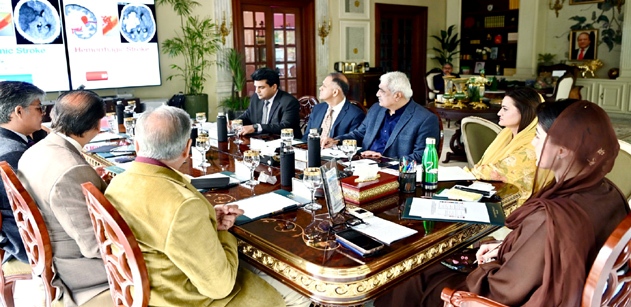
Punjab Chief Minister Maryam Nawaz Sharif has approved the establishment of stroke management centres in every district of the province to ensure timely and specialized treatment for stroke patients close to their homes.
The decision was taken during a meeting of the Health Department chaired by the chief minister, here on Tuesday.
The meeting also approved, in principle, the posting of neurologists and paediatric neurologists at all District Headquarters (DHQ) hospitals across Punjab.
Under the approved plan, one doctor and one nurse from each district will undergo a three-month specialized training programme in stroke management.
The chief minister further directed the immediate launch of a telemedicine project for stroke patients, enabling district hospitals to consult senior specialists and neurologists through direct telephone and telemedicine links to ensure prompt and effective treatment.
CM Maryam Nawaz instructed the Health Department to initiate a dedicated training programme for nurses at stroke management centres and to take necessary steps for providing stroke management training to rescue service personnel. She also directed the launch of a comprehensive public awareness campaign focusing on stroke prevention, early diagnosis, and timely treatment.
During the briefing, health experts highlighted the importance of an integrated approach encompassing pre-hospital, hospital, and post-hospital care for stroke patients.
The meeting was informed that the golden hours immediately after a stroke are critical for successful treatment and recovery.
“The importance of golden hours in stroke treatment is universally recognised. I will personally lead the public awareness campaign,” the chief minister said, adding that the government aims to ensure that no patient is forced to travel to major cities for stroke treatment. She further announced that stroke management centres would also be established at children’s hospitals across Punjab to address paediatric neurological emergencies.
The meeting was informed that one in four people above the age of 25 is at risk of stroke. Neurologist Dr Qasim Bashir from PIMS Islamabad gave a detailed briefing on the proposed stroke management programme and its implementation framework. APP