JUI-F leader succumbs to injuries after Lower South Waziristan blast
Incident attack on moderate, peaceful and democratic ideology: Fazal
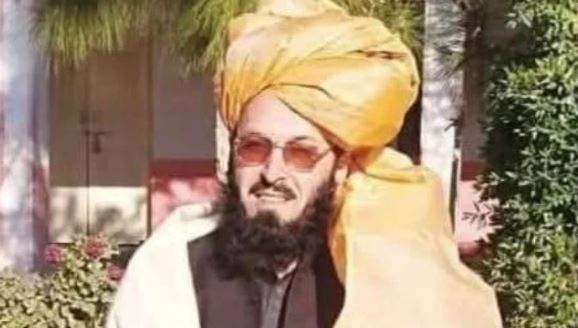
SOUTH WAZIRISTAN: A senior Jamiat Ulema-i-Islam-Fazal (JUI-F) leader succumbed to his injuries on Saturday morning after being critically wounded in a bomb blast near a madressah in the Wana bazaar area.
Police said that a remote-controlled improvised explosive device (IED) was planted in the Konra Cheena area near a religious seminary to target Maulana Sultan Muhammad Wazir, who was also the district president of Wafaqul Madaris al Arabia.
He was immediately taken to Dera Ismail Khan for medical treatment but breathed his last on the way.
Lower South Waziristan District Police Officer (DPO) Muhammad Tahir Shah Wazir confirmed that an investigation into the incident was underway. He said law enforcement agencies were examining all aspects of the incident, adding that the evidence collected from the site was being analysed to trace those responsible.
The attack on Maulana Sultan is the latest in a series of incidents targeting religious scholars and JUI-F leaders in South Waziristan, particularly in Wana and the Birmal tehsil, over the past two years.
In a statement posted on X, JUI-F chief Maulana Fazal Rehman expressed his deep grief on Sultan’s death, describing him as a “devoted and courageous leader”.
“This incident is not merely an attack on an individual but an assault on the moderate, peaceful, and democratic ideology,“ he said, asserting that the JUI-F was the “flag-bearer” of these values.
“Following Bajaur, the targeting of freedom-loving and peace-advocating scholars in regions carrying deep religious significance like South Waziristan marks a deeply alarming pattern,” he said.
Fazal recalled that in March 2025, JUI-F’s South Waziristan Emir was “severely injured” in a bomb blast and “till date remains under treatment at Multan’s Nishtar Hospital”.
He further pointed out that former JUI-F district president Maulana Mirza Jan Wazir had been injured in a terrorist attack in June 2024 and had now passed away.
Fazal said that the targeting of a party such as the JUI-F, which believed in “moderation, tolerance and constitutional struggle”, was extremely upsetting and a moment for serious reflection.
The JUI-F chief said such attacks on scholars were “not only resounding proof of the failure and negligence of security institutions but also sinister attempts to suppress the peaceful narrative” that his party had been promoting for years across the country, including tribal areas.
“The sole crime of such scholars is that they advocate for reason over the gun, love over hatred, and peace over discord,” Fazal lamented.
He asserted that the JUI-F had always opposed oppression and violence, spoken for the supremacy of the Constitution and law, and adopted the struggle for reform and peace as its motto while remaining within the framework of the state.
“This is precisely why the party, while staying away from all shades of extremism and radicalism, is recognised as a balanced, responsible, and mainstream national political force.”
Fazal called on the “institutions responsible for national security” to recognise their constitutional and moral obligations; ensure the establishment of peace and the effective protection of scholars across the country, particularly in the tribal districts; and fulfil the demands for justice by meting out punishment to the elements involved in these tragic incidents.
He affirmed that the JUI-F would continue its struggle for peace, religious harmony, democratic values, and constitutional supremacy in the country with “full resolve, no matter how many sacrifices it must give along the way”.
Separately, a suspected improvised explosive device (IED) blast targeted the vehicle of peace committee chief Qadeem Khan in the Barwand area of South Waziristan’s Servekai tehsil. Staff Report