Elite unit to guard Chinese in federal capital: Naqvi
Islamabad-Beijing agree on rapid-response anti-terror framework and AI cyber aid
ISLAMABAD: In a bold escalation of security measures, Pakistan’s Interior Minister Mohsin Naqvi announced the deployment of an elite Special Protection Unit (SPU) in the federal capital to provide ironclad safeguards for Chinese nationals amid relentless terror threats targeting their lives and projects.
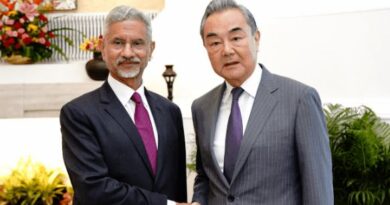
Naqvi unveiled the initiative during high-stakes talks with China’s Minister of Public Security Wang Xiaohong at the ministry’s Beijing headquarters, where he was accorded a red-carpet welcome. The SPU—described by Naqvi as a “rapid-response elite force”—will station specialized teams in Islamabad to deliver intelligence-led protection for diplomats, engineers, and executives, many of whom coordinate the $62 billion China-Pakistan Economic Corridor (CPEC) from the capital.
“The protection of Chinese citizens and projects of mutual interest remains our top priority,” Naqvi declared, outlining “effective measures” including advanced surveillance and tactical interventions. This builds on the 2016 CPEC Security Force and Prime Minister Shehbaz Sharif’s July 2025 mandate for fortified airport protocols and a “business-friendly” haven for the Chinese community, crucial to Pakistan’s economic resurgence.
The urgency is stark: Since CPEC’s 2015 rollout as a Belt and Road flagship, Baloch separatists and jihadist outfits have unleashed a barrage of attacks, framing the corridor as exploitative colonialism. National Counter Terrorism Authority data tallies 20 Chinese killed and 34 injured from 2021 to December 2024, with 2025’s violence hitting fever pitch—a March suicide bombing in Besham slew five engineers; an August assault at Gwadar Port wounded three; and deadly ambushes rocked Quetta and Dasu. Flashpoints like October 2024’s Karachi airport blast (two Chinese dead) and a November shooting (two injured) amplified Beijing’s demands, with President Xi Jinping in September 2025 insisting on unbreachable defenses to preserve bilateral trust.
Beyond the SPU, the ministers hammered out a robust anti-terror pact: joint training expansions, real-time intelligence swaps, and a unified rapid-response system to dismantle threats from groups like the Balochistan Liberation Army. They also greenlit cybercrime countermeasures, with Naqvi eyeing Chinese AI to turbocharge Pakistan’s National Cyber Crimes Investigation Agency against digital perils.
Institutional glue includes quarterly working groups and annual ministerial huddles. Naqvi extended a Pakistan invite to Xiaohong, relaying warm regards from President Asif Ali Zardari and Sharif; in turn, Xiaohong beckoned Naqvi to China’s Global Security Cooperation Forum in September, capping the session with a hosted luncheon that toasted the “strategic partnership.” Riaz Missen