IHC declares plea on Justice Jahangiri’s degree case admissible
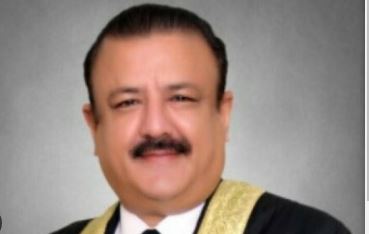
ISLAMABAD: The Islamabad High Court (IHC) declared on Tuesday a petition seeking the verification of Tariq Mehmood Jahangiri’s degree maintainable and sought a reply from the judge on the matter within three days.
The petition questioning the legitimacy of the LLB degree of the IHC judge and seeking a judicial determination on whether he lawfully held office as a high court judge was filed by lawyer Mian Daud. The court had reserved its decision on the maintainability of the plea in July last year.
The case against Justice Jahangiri centres on a letter that began circulating last year on social media, purportedly from the University of Karachi’s controller of examinations, regarding the judge’s law degree.
A two-member IHC bench, comprising Chief Justice Sardar Muhammad Sarfraz Dogar and Justice Muhammad Azam Khan, issued the verdict today after hearing arguments on the matter.
During the hearing, Ahmed Hassan Shah, who was representing the District Bar Association, contended that the matter should be referred to the Islamabad Bar Council (IBC), which issues licences to lawyers.
While presenting his arguments, Aleem Abbasi, who was representing the IBC, contended that while Article 209 could be applied in various matters, a “new trend” seemed to be emerging.
He said that Justice Jahangiri held three licences, and the matter of his qualification needed to be addressed by a competent authority.
Abbasi reminded the court that an intra-court appeal was pending — seemingly a reference to a plea filed in the Federal Constitutional Court by five IHC judges, including Justice Jahangiri — and the appointment of one of the judges hearing the case had previously been questioned.
“Your lordship may help him if a judge is being arm-twisted,” he further remarked.
For his part, amicus curiae Barrister Zafarullah Khan raised questions regarding the maintainability of the plea. He also raised the question whether the case should proceed under Article 209 or Article 199.
Highlighting that the case concerned the “integrity of a judge”, he noted that sub-clause 5 of Article 199 excluded courts and sub-clause 3 excluded the armed forces.
Moreover, he pointed out that the Supreme Court (SC) had also previously dealt with the matter at hand.
At that, CJ Dogar remarked that the SC had directed the IHC to proceed with the plea. He also observed that a writ of quo warranto could be issued against a judge.
The term quo warranto refers to legal action requiring a person to show by what warrant an office is held.
During the hearing on Tuesdy, Advocate General Ayaz Shaukat read out a report by the University of Karachi.
Reading the report, the advocate general said Justice Jahangiri had been debarred from appearing in an LLB exam for three years in 1988, but he still sat an exam under a different name.
At that, Abbasi argued that the Sindh High Court had suspended the KU notification cancelling the judge’s degree. CJ Dogar, however, observed that the degree had not been restored. The court then declared the plea questioning the legitimacy of the judge’s law degree maintainable and issued notices to the respondents, directing them to submit their replies within three days. Monitoring Desk