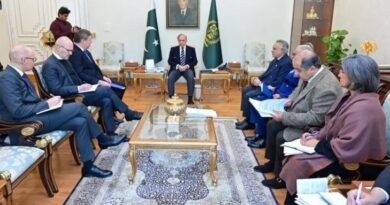
Pakistan hosts region’s largest space science and technology conference
ISLAMABAD: Pakistan has marked a significant achievement in its space journey with the inauguration of the largest Space Science and Technology Conference in the region. The event, named ICAST-2025, is being held at the Institute of Space Technology (IST) in Islamabad and is jointly organized by the Space & Upper Atmosphere Research Commission (SUPARCO) and IST.
Supported by notable organizations such as the Inter-Islamic Network on Space Sciences & Technology, the Asia-Pacific Space Cooperation Organization (APSCO), the Islamic Educational, Scientific & Cultural Organization, the Institute of Electrical and Electronics Engineers (IEEE), and the National Center for GIS & Space Applications, the conference brings together astronauts, scientists, policymakers, academic leaders, and international organizations to discuss the future of space technology and its applications.
Mongolian cosmonaut Gurragchaa Jügderdemidiyn, the chief guest at the opening ceremony, emphasized the importance of global collaboration for the advancement of humanity through space science. He underscored how space technology plays a pivotal role in areas such as climate monitoring, disaster preparedness, agriculture, and communication, and expressed optimism that the conference would foster new partnerships and innovations.
SUPARCO Chairman Muhammad Yousaf Khan, in his inaugural speech, reaffirmed Pakistan’s commitment to leveraging space technology for sustainable development and enhancing international cooperation. Dr. Syed Najib Ahmed, Vice Chancellor of IST, noted that the conference serves as a crucial platform for connecting Pakistan’s space education and research initiatives with global advancements in the field.
The event also saw addresses from the Acting Chairperson of the Higher Education Commission, the Secretary-General of APSCO, and the Director of the United Nations Office for Outer Space Affairs (UNOOSA), who all praised Pakistan’s contributions to making space science more accessible on a global scale.
The first day of the conference featured the Strategic Leadership Summit of the Inter-Islamic Network on Space Sciences, in alignment with the UN’s “Access to Space for All” initiative. Leaders from research bodies across the OIC, APSCO, ICESCO, and the Turkish Space Agency shared insights, while representatives from China, Tunisia, Iran, Bangladesh, and Senegal participated in high-level discussions.
The technical program of ICAST-2025 includes seminars and workshops on various topics, including space technologies for national security, astronomy, artificial intelligence, geospatial analytics, satellite systems, and advanced communication.
With more than 25 countries and over 70 international delegates participating, the conference will continue for the next two days, offering a comprehensive platform for advancing global dialogue on the peaceful use of outer space and its potential to benefit humanity.
ICAST-2025 highlights Pakistan’s ongoing commitment to using space technology for social development, climate resilience, disaster management, and fostering stronger international partnerships in space exploration. Syed Naveed Jamal