Pakistan & Afghanistan extend ceasefire
Islamabad, Kabul engaged in constructive dialogue for peaceful resolution: FO
ISLAMABAD: The temporary ceasefire between Pakistan and Afghanistan has been extended.
A Pakistani delegation has already arrived in Doha, while an Afghan delegation was expected to reach the Qatari capital today (Saturday.
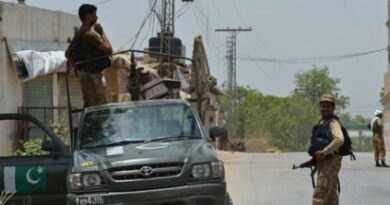
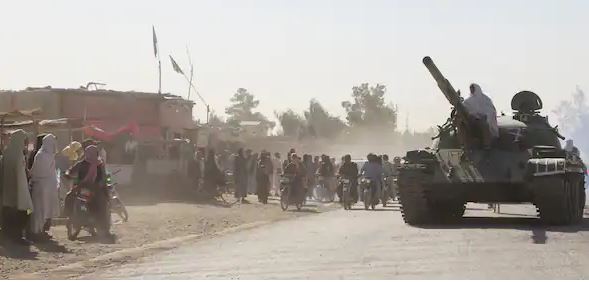
On the night of August 11, Afghanistan launched an unprovoked attack on Pakistani border posts, triggering a series of skirmishes that carried on until Wednesday, leaving 23 troops martyred and over 200 Taliban fighters dead.
The development comes hours after Foreign Office spokesperson Shafqat Ali Khan said that Pakistan and Afghanistan are engaged in constructive dialogue aimed at achieving a peaceful resolution to ongoing border tensions.
In his weekly press briefing, FO spokesperson Shafqat Ali Khan said Pakistan had repeatedly informed Kabul about the presence of Fitna al-Khawarij within Afghanistan.
He expressed deep concern over the Taliban’s “provocative attacks” along the border between October 11 and 15, which Pakistan effectively repelled in self-defence.
The spokesperson said Taliban forces and terrorist hideouts under their use suffered significant losses. “Our retaliatory action was against terrorist elements, not civilians,” he stated, adding that a 48-hour ceasefire was enforced from 6pm on October 15 at the Taliban’s request.
Khan said both countries are engaged in constructive talks for a peaceful resolution. Pakistan expects the Taliban government to take concrete action against terrorist elements and ensure Afghan soil is not used for terrorism, in line with its commitments.
He further added that Pakistan respects Afghanistan’s sovereignty and seeks dialogue and cooperation to address the shared challenge of terrorism.
“The recent contacts between the two countries reflect mutual trust and understanding,” the spokesperson added.
He praised Saudi Arabia’s traditional diplomatic approach aimed at promoting stability and reducing tensions in the region.
Regarding reports of ceasefire violations, the spokesperson said detailed information could be obtained from the ISPR.
The spokesperson said the ceasefire had been initiated at the request of the Afghan Taliban and was enforced for 48 hours. He added that the ceasefire arrangement was finalised entirely through bilateral diplomatic communication. The Taliban, he noted, had directly approached Pakistan for a ceasefire.
He rejected the Taliban’s claim that the ceasefire had been requested by Pakistan, terming it incorrect.
The spokesperson clarified that there has been no fundamental change in Pakistan’s policy towards Afghanistan, only a slight shift in the way its position is articulated.
He confirmed that the embassies of both Pakistan and Afghanistan in Islamabad and Kabul are functioning as usual.
Pakistan’s policy is based on diplomacy, stability, and peace, he said.
He added that Pakistan has hosted over four million Afghan refugees for four decades and will continue to regulate the presence of foreigners on its soil in accordance with international norms and domestic laws.
“Pakistan wishes to see a peaceful, stable, and prosperous Afghanistan,” Khan said, expressing hope that the Afghan people would one day live freely under a representative and inclusive government.
The spokesperson also voiced Pakistan’s serious reservations over the recent joint India-Afghanistan statement, terming its references to Jammu and Kashmir a clear violation of UN resolutions and international law.
He further rejected the Afghan acting foreign minister’s claim that terrorism was Pakistan’s internal issue, noting that Pakistan had already shared details of active terrorist groups operating from Afghan territory. “Afghanistan cannot absolve itself of responsibility to prevent its soil from being used for terrorism,” Khan concluded. “Peace and stability are shared responsibilities.” Staff Report