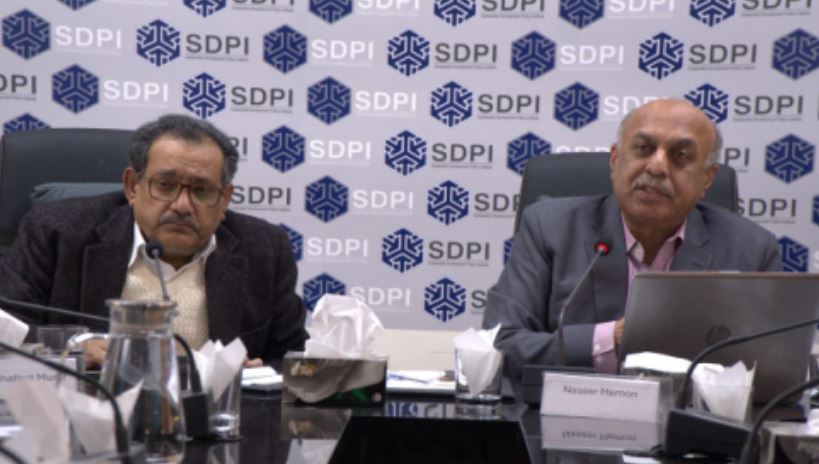
Expert calls for legislation on groundwater extraction for commercial purposes
ISLAMABAD: Groundwater depleting is going worse to worst touching its dangerous levels in various parts of Pakistan because of its excessive domestic, agricultural and commercial consumption of water and so far, there is no strict regulation on its extraction, said Naseer Memon, the renowned water expert and Senior Advisor of Sustainable Development Policy Institute (SDPI).
He was speaking at the second leg of a Special Talk on the ‘Water Resources Management in Pakistan’, organized by the SDPI here, said a press release issued on Monday.
Memon said Indus Basin aquifer that primarily cover Pakistan has been ranked as the 2nd most over-stressed underground water reserve in the world that needs immediate attention of the government.
He said that urban population in Pakistan has increased from 46 million in 1997 to 94 million in 1923, thus population explosion was the single largest concern that demanded special attention of the policy makers to ensure water security.
In Quetta, he said, water table has dropped from about 50 metres in 2,000 to over 150 metres by 2023; In Lahore, the water table drops by an average of 2.61 feet annually; in Rawalpindi, water table decreases by approximately 30 feet since 2013 while Karachi receives 650 MGDs against a daily demand of over 1,200 MGDs.
He maintained that over one-third (35 to 40 per cent) of piped water is wasted through leakages and theft in the water distribution networks that needs to be checked and stopped.
He said agriculture consumes over 90% of the extracted groundwater where as over 60% of irrigation requirements in Indus Basin are met by pumping. Number of agricultural tubewells in the Punjab has soared from 334,000 in 1994 to over 1.2 million in 2024 which withdraw over 51 MAF of groundwater annually, he added.
Mr Memon said that over-extraction of groundwater has caused water tables to drop below 6 meters in more than 50% of irrigated areas.
He suggested adopting water conservation techniques such as sponge cities, managed aquifer recharge, rainwater storage, etc. He also suggested making flood channels for groundwater recharge, wetlands and natural depressions to store floodwater to overcome the future water crisis.
Earlier, Dr Shafqat Munir, Deputy Executive Director, SDPI introduced Naseer Memon as a professional water governance expert and member to many high-level forums and held senior leadership positions in different national and multinational organizations. He said groundwater depletion is matter of grave concern for the people of Pakistan as its wastage cannot be tolerated on the pretext that it is a natural commodity. It is not only essential to life but also linked to policy and governance, he added. Staff Report