Delegates from 65 countries attend NDMA briefing on disaster management, climate resilience
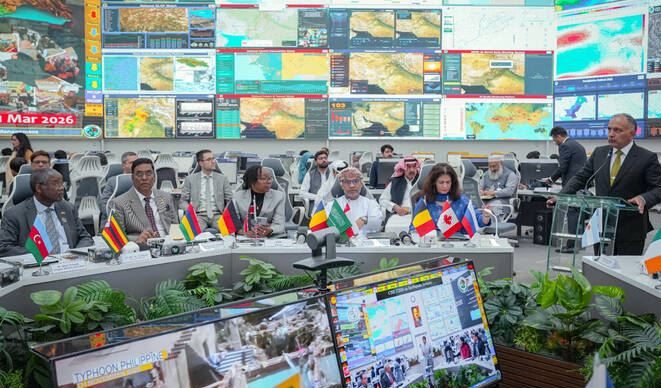
ISLAMABAD: Delegates from 65 countries, comprising ambassadors, deputy heads of mission (DHMs) and senior diplomats, including representatives from 40 Pakistani missions abroad, attended the strategic appraisal and capabilities exposition of the National Emergencies Operation Center (NEOC) at NDMA Headquarters on Monday.
Senior officials from the Ministry of Foreign Affairs were also present on the occasion. Chairman NDMA, Lt Gen Inam Haider Malik HI(M), presented a comprehensive overview of Pakistan’s transition to a proactive, technology-driven disaster management system, emphasising the importance of strengthening international cooperation in disaster risk reduction. He highlighted that these indigenously developed systems enable anticipatory actions, informed decision-making and coordinated responses across all tiers of governance.
The chairman also shared ongoing efforts to extend technical expertise, early warning solutions and capacity-building support to partner countries, underscoring readiness for collaboration in NEOC replication, data sharing, joint training and coordinated responses to shared risks. He further informed the forum about progress on memorandums of understanding (MoUs) related to proactive disaster management and climate resilience.
The NDMA team briefed participants on its Disaster Early Warning and Technology Ecosystem, showcasing advanced operational dashboards, integrated digital platforms and real-time monitoring capabilities at the NEOC. Delegates were given a detailed demonstration of Pakistan Disaster Lens 2026, a flagship platform offering high-resolution forecasts and risk analytics to support precision-based preparedness and response planning.
Global Disaster Lens 2026, which monitors international disaster and climate patterns in real time, was also presented, positioning Pakistan as a contributor to global disaster intelligence and climate resilience.
Ambassadors were further briefed on NDMA’s Disaster Early Warning (DEW-2) system, outlining potential hazards and climatic risks for the next three months. The briefing also covered NDMA’s public outreach initiatives, including mobile-based early warning dissemination and the Global Disaster Early Warning (GDEW) application, designed to provide information on global hazard calendars, comprehensive international simulation exercises (CISE), global best practices and Sustainable Development Goals (SDGs) performance. These initiatives reflect Pakistan’s commitment to bridging institutional capabilities with community-level resilience.
Visiting dignitaries commended Pakistan’s advancements in proactive disaster management and acknowledged the importance of technology integration, regional collaboration and knowledge exchange in addressing climate-induced disasters. They expressed interest in strengthening bilateral and multilateral cooperation with NDMA in early warning systems, disaster preparedness and capacity development.
The session also included visits to NDMA’s Centre of Excellence (CoE), Disaster Resilient Infrastructure Model (DRIM) courtyard and the log yard within NDMA premises. It concluded with the presentation of souvenirs and a group photograph, symbolising a shared commitment to global resilience and effective disaster risk management.
Representatives from Mauritius, Turkmenistan, Ivory Coast, Oman, Saudi Arabia, Portugal, Nigeria, the Netherlands, Azerbaijan, Kenya, the Philippines, South Africa, Uganda, Germany, Austria, Japan, Thailand, Canada, Sri Lanka, Malaysia, Brunei, South Korea, Sweden, Norway, Romania, Rwanda, Myanmar, Belgium, Somalia, Tajikistan, the United Kingdom, Russia, Syria, Jordan, China, the Czech Republic, Brazil, Ireland, Argentina, Türkiye, Cambodia, Egypt, Kuwait, Zimbabwe, Ukraine, Ghana, the United States, Yemen, Ethiopia, Tunisia, Qatar and Bulgaria attended the session.
Chairman NDMA thanked the ambassadors for their participation and reaffirmed Pakistan’s commitment to collaborative approaches for a safer, more resilient future. Syed Naveed Jamal