All US bases should immediately be closed in the region’: Mojtaba Khamenei in first message
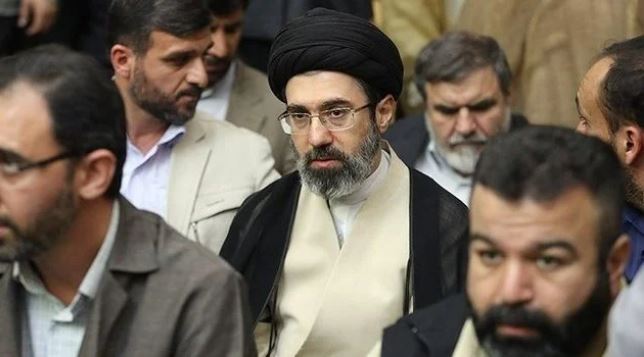
TEHRAN: Iranian Supreme Leader Mojtaba Khamenei said all US bases in the region should be immediately closed and warned they would be attacked if they remain open.
In his first official message on Thursday, he added that the “closure of the Strait of Hormuz should be continued as a tool to pressure the enemy.”
Khamenei vowed “revenge for the blood of the martyrs,” specifically referencing the attack on the school in Minab, and condemned attempts by foreign powers to dominate Iran’s territory.
He further stressed that, despite attacks originating from neighbouring countries, “war against Iran must not affect our relationship with our neighbours.”
Separately, Secretary of Iran’s Supreme National Security Council, Ali Larijani, has warned that any move to cripple Iran’s power infrastructure would trigger sweeping retaliation across the region.
Responding to remarks by US President Donald Trump about Iran’s electricity network, he said on Thursday that if such an action were carried out, the consequences would not remain limited to Iran.
“If they take apart Iran’s electric capacity, the entire region will go dark in less than half an hour,” he wrote on X, adding that widespread blackouts would create conditions in which US servicemen in the region would be vulnerable while seeking safety.
Earlier, Iran’s Parliament Speaker Mohammad Bagher Ghalibaf has issued a stern warning, declaring that any attempt to attack Iran’s islands would provoke a decisive and uncompromising response.
“Any aggression against the territory of our islands will break all limits of restraint. We will respond fully, turning the Persian Gulf into a grave for invaders,” he said in a post on X.
A spokesperson for the Islamic Revolutionary Guard Corps (IRGC)’s Khatam al‑Anbiya Central Headquarters said Iran had not attacked Oman and described the incident at Salalah port as suspicious and under investigation.
“The incident at the Port of Salalah in the friendly and neighbouring Sultanate of Oman appears highly suspicious and is currently under investigation,” the spokesperson said.
The spokesperson added that Iran’s armed forces fully respect the security and national sovereignty of Oman and emphasised that the Islamic Republic holds the country in high regard as a friendly neighbour.
Meanwhile, the spokesperson for the Iranian army, Brigadier General Mohammad Akrami Nia, stated in an interview with Iranian state television that the disruption of the enemy’s radars facilitates access to sensitive points inside Israel.
He added that the Iranian army was able today to target the Palmachim and Ovda air bases, as well as the headquarters of the General Security Service (Shin Bet) near Tel Aviv, and that the operations are becoming more precise day by day.
Trump administration says first six days of Iran war cost $11.3b
Officials from the US President Donald Trump’s administration have told lawmakers that the first six days of the war against Iran have cost the United States at least $11.3 billion, Al Jazeera reported.
The estimate was shared in a closed congressional briefing this week and, administration officials say, covers the immediate campaign expenses but not the full scope of costs associated with military buildup and ongoing operations. Lawmakers pressing for more detailed figures have been told that the total is expected to rise as further assessments are completed.
Some congressional aides have indicated the White House may seek as much as $50 billion in supplemental funding for the conflict. Public details about the administration’s overall cost projections and the projected duration of the war remain limited.
Trump has publicly characterised the conflict as effectively won, even as defence officials warn that continued operations will require significant resources, according to Al Jazeera.
Gulf emphasise restraint and diplomacy to avoid wider conflict
Gulf Arab governments have expressed deep anger over Iranian attacks on their territories but are pushing strongly for diplomacy as the preferred path forward, Al Jazeera reported.
Officials from several Gulf states reject Tehran’s justification that strikes on their soil are legitimate because of their alliances with the United States. They argue that Iran’s interpretation is both exaggerated and strategically flawed, and they have accused Tehran of miscalculating the regional impact of its actions.
Despite public outrage and repeated condemnations, Gulf leaders have reiterated that military escalation is not a solution. They see robust defence measures — including missile‑intercept systems — as necessary, but stress that a broader conflict would be damaging for all parties involved.
Senior Gulf officials have underscored the necessity of diplomacy, saying that even after the current hostilities end, their countries will remain neighbours to Iran and must find a way to coexist. They have sought to reassure their domestic audiences that avoiding deeper involvement in the war remains a top priority, and that restraint and negotiations offer the best chance of long‑term stability.
Meanwhile, the Bahrain Defence Force said its air‑defence systems have shot down and destroyed a total of 105 missiles and 176 drones launched at the kingdom since the start of the conflict. The force described the interceptions as part of its continued response to Iranian attacks on countries in the Gulf, according to Al Jazeera.
Iran tanker attacks ignite Gulf oil fears, challenge Trump’s claim war is won
Iran have set ablaze two tankers in Iraqi waters as it stepped up attacks on oil and transport facilities across the Middle East, warning the world should be ready for oil at $200 a barrel in defiance of President Donald Trump’s claim that the US had already won the war.
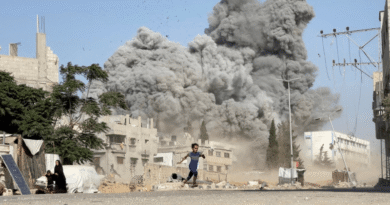
Unleashed with joint US and Israeli air strikes on Iran almost two weeks ago, the war has so far killed around 2,000 people and thrown global energy markets and transport into chaos. The conflict has spread across the Middle East and prompted plans for a record release of strategic oil reserves to dampen one of the worst fuel shocks since the 1970s.
The United Nations Children’s Fund (UNICEF) said more than 1,100 children had been killed or injured.
At a campaign-style rally in Kentucky ahead of November midterm elections in which his Republican party is trailing badly, Trump said the United States had won the war but didn’t want to have to go back every two years.
“We don’t want to leave early do we?” he said on Thursday. “We got to finish the job.”
Oil prices, which shot up earlier in the week to nearly $120 a barrel before retreating, jumped almost 10% back above $100 a barrel in Asian trade on Thursday amid renewed fears about supply disruption. Wall Street’s main share indexes fell and stocks in Asia followed suit.
Iran has made clear it intends to impose a prolonged economic shock, with the spokesperson for Iran’s military command saying in remarks directed at the US on Wednesday: “Get ready for oil to be $200 a barrel, because the oil price depends on regional security, which you have destabilised.”
Iranian explosive-laden boats appear to have attacked two fuel tankers in Iraqi waters setting them ablaze and killing one crew member after projectiles struck three merchant vessels in Gulf waters, port officials, maritime security and risk firms said. Web Desk/Agencies