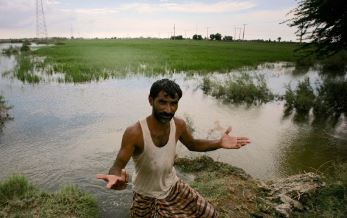
Sindh farmers face acute water crisis amid IWT violations by India
SUKKUR: Farmers in northern Sindh are facing a severe water shortage, threatening wheat harvesting and threshing operations. The water crisis has worsened due to India’s unilateral decision to place the Indus Waters Treaty (IWT) in abeyance, sparking concerns over Pakistan’s water rights.
The IWT, signed in 1960, allocates the Indus River’s waters to Pakistan, with India having rights to the eastern rivers. India’s move has raised fears of a severe water shortage, impacting major crops like 1.2 million acres of wheat, 0.5 million acres of rice, and 0.2 million acres of sugarcane, affecting millions of people.
Farmers are worried, as the agricultural season has begun, and water flows in the Indus River are dwindling. This is a man made crisis, said local farmer Saeed Ahmed Katpar. “India’s actions will have devastating consequences for our crops and livelihoods.
The agricultural season started in March and will continue till April, with a shortage of water leaving farmers worried about the future of their crops and livelihoods.
The Farmers have urged the United Nations (UN) to take immediate action, ensuring India’s compliance with the IWT. The international community is also being appealed to, to pressure India to respect the treaty.
With the wheat threshing season underway, farmers are anxiously waiting for a resolution, fearing severe food shortages and economic losses. APP