Supreme Leader Khamenei Assassinated in Coordinated US-Israel Strike
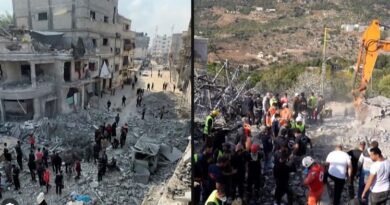
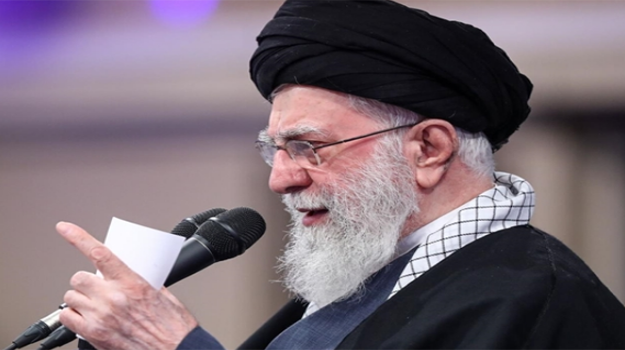
TEHRAN: In a dramatic escalation of Middle East hostilities, Iran’s Supreme Leader Ayatollah Ali Khamenei was assassinated on Saturday following a massive coordinated military strike by the United States and Israel, state media confirmed early Sunday morning.
The precision attack, described by military analysts as the most ambitious operation against Iranian targets in decades, successfully eliminated the cleric who had ruled Iran since 1989. A senior Israeli official, speaking on condition of anonymity, confirmed to Reuters that Khamenei’s body was located following the strike. Former US President Donald Trump verified that Washington worked “closely with Israel” to target the Iranian leader, marking what many view as the most significant foreign policy gamble of his career.
“The world is safer today,” Trump wrote on Truth Social, detailing that sophisticated intelligence and tracking systems had monitored Khamenei’s movements prior to the attack. “There was not a thing he, or the other leaders that have been killed along with him, could do.” Despite his campaign platform as a “peace president,” Trump authorized the strikes to neutralize what he described as a decades-long threat and to prevent Iran from developing a nuclear weapon. He warned that the “heavy and pinpoint bombing” would continue throughout the week to achieve peace across the Middle East and the world.
Iranian state media reported that the leader was “carrying out his assigned duties and was present at his workplace” when the “cowardly attack occurred in the early hours of Saturday morning.” In response, the government has announced 40 days of national mourning and declared a seven-day public holiday.
The Islamic Revolutionary Guard Corps (IRGC) released a statement mourning the loss of a leader they described as “unique in terms of purity of spirit, strength of faith, resourcefulness in affairs, courage in the face of the arrogant, and jihad in the path of God.” However, the tone quickly shifted to vengeance as the Guards vowed “severe punishment” for the “murderers,” warning that the “hand of revenge of the Iranian nation” would deliver a severe and decisive punishment. They threatened that the “most intensive” offensive against Israel and US bases was imminent.
The strikes were not limited to the political leadership. Three sources familiar with the matter confirmed that Iranian Defence Minister Amir Nasirzadeh and Revolutionary Guards commander Mohammed Pakpour were also killed. The Israel Defense Forces verified that five other senior military commanders were dead, including Ali Shamkhani, a key adviser to the supreme leader. Iranian media outlets reported that several of Khamenei’s family members, including his daughter, a grandchild, his son-in-law, and daughter-in-law, perished in the attack.
In an immediate show of defiance, Iran launched retaliatory missiles at Israel and at least seven other countries, including Gulf states that host US military bases, labeling the US-led strikes as “unprovoked and illegal.”
The Nuclear Programme and Regional Fallout
The assassination marks the culmination of a two-year shadow war that has decimated Tehran’s senior military ranks and weakened its proxy forces across the Middle East. The operation follows a 12-day air war in June, during which Israel—joined by the United States—pounded Iranian infrastructure. Washington and Jerusalem had previously issued stark warnings that they would strike again if Tehran refused to curb its nuclear and ballistic missile ambitions.
Israeli Prime Minister Benjamin Netanyahu confirmed the total destruction of Khamenei’s compound, signaling that Israel is prepared for the inevitable escalation. As the region braces for the retaliatory storm promised by the IRGC, the international community watches warily, fearing that the “severe punishment” threatened by Iran could ignite a wider, uncontainable conflict. Monitoring Desk