Pakistan, Russia Vow to Deepen Strategic Ties, Boost Media Collaboration at Moscow Forum
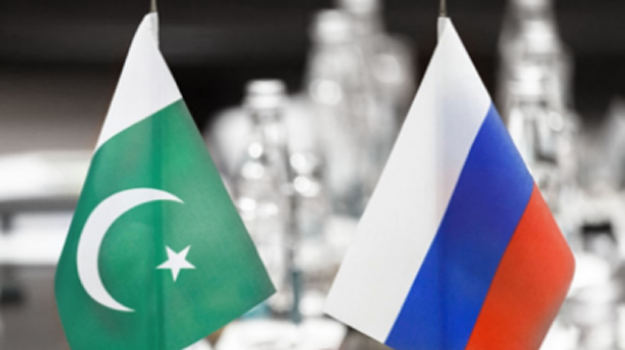
ISLAMAD: Senior diplomats and policy experts from Pakistan and Russia have called for a significant enhancement of strategic engagement, the expansion of economic and defence cooperation, and stronger media collaboration to further consolidate the burgeoning partnership between the two nations. The consensus emerged during the inaugural Pakistan-Russia Media Forum, underscoring a mutual commitment to deepen bilateral ties across multiple sectors.
Speaking from Moscow during the first session of the forum, titled “Global Challenges and Perspectives in the Changing World: Overview from Moscow and Islamabad,” Pakistan’s Ambassador to the Russian Federation, Faisal Niaz Tirmizi, stated that the event reflects a profound and shared intellectual interest between the two countries. “Notably, the upcoming summit in Moscow will mark the fifth meeting between Prime Minister Shehbaz Sharif and President Vladimir Putin, highlighting a high level of diplomatic engagement,” he added, signalling the frequency and importance of top-level discussions.
Ambassador Tirmizi also announced that Pakistan is organizing a dedicated Pakistan-Russia Business Forum. He revealed that over 100 leading Pakistani companies are scheduled to engage with their Russian counterparts during the Prime Minister’s upcoming visit, aiming to unlock new avenues for trade and investment.
Highlighting the growing bilateral momentum, the ambassador emphasized vast opportunities in education, trade, agriculture, and cultural exchanges, stressing the critical importance of strengthening people-to-people contacts. “We aim to increase the number of Pakistani students in Russia to 13,000 and warmly welcome Russian scholars to Pakistan for academic exchanges,” he said. He also noted the regular conduct of ‘Druzhba’ military exercises and joint naval drills, reaffirming Pakistan’s unwavering commitment to peace, dialogue, and diplomacy as the primary means to promote regional and global stability.
Russia Calls for Joint Front Against Disinformation and Islamophobia
Director of the Information and Press Department at the Russian Ministry of Foreign Affairs, Maria Zakharova, described the forum as an excellent opportunity to promote media cooperation between Russia and Pakistan. She stated that it reflects an innovative vision in the field of information exchange, which has become a critical arena for international relations.
Zakharova noted that information has evolved into a strategic resource and a key dimension for measuring national power and sovereignty, though it presents certain challenges alongside its considerable benefits. She further observed that new forms of hybrid conflicts are emerging, which employ political, economic, and non-military measures rather than conventional military means, making information warfare a central battleground.
Speaking with urgency, she addressed the alarming rise in the quantity of fake news, saying it has exceeded all limits. She argued that millions of people are being led to believe that nothing significant is happening, even as the international media landscape enters a new and precarious era. Maria Zakharova was critical of historical efforts to shape public opinion prior to military interventions. She questioned how populations were deceived nearly two decades ago through media manipulation, a trend she said resulted in dire humanitarian consequences in different parts of the world.
In a show of solidarity, Zakharova also voiced Russia’s support for March 15 as the International Day to Combat Islamophobia. She stressed the need to prove who truly represents culture and faith, noting that all major doctrines advocate for both freedom of speech and freedom of religion. However, she observed that some countries, despite claiming to uphold these values, fail to notice the contradiction between their stated principles and their actions. She emphasized the importance of working together through constructive dialogue to bridge these divides.
# Pakistan and Russia Eye New World Order Based on Equality and UN Charter
Chairman of the Pakistan-China Institute and former Parliamentarian, Syed Mushahid Hussain, praised the proactive role of Pakistan’s Ambassador and asserted that the Prime Minister’s upcoming visit to Russia in March is expected to be a landmark event in the bilateral relationship.
Highlighting the growing alignment between the two countries, Hussain stressed that Pakistan and Russia share no fundamental conflicts of interest. Drawing on his extensive personal experience dating back to his first visit to the Soviet Union in 1984, he recounted decades of professional and personal linkages with Russian media, including collaborations with outlets such as Russia Today (RT) and sporting news networks.
Syed Mushahid Hussain also emphasized the critical importance of addressing media perception and countering misinformation. He highlighted persistent double standards in international media coverage, pointing to situations such as Palestine, where humanitarian crises are often overshadowed by geopolitical interests.
He strongly advocated for the creation of a new, rules-based international order anchored in inclusivity, equality, international law, and the fundamental principles of the United Nations Charter. “Pakistan and Russia are aligned in this vision,” he said, emphasizing the importance of joint efforts to uphold global norms and implement cooperative solutions to transnational challenges such as climate change, poverty alleviation, and regional security.
Hussain called for the establishment of sustained media bridges, strengthened people-to-people connections, and strategic cooperation to advance Pakistan-Russia relations and promote a stable, prosperous, and multipolar global order.
Russia’s Envoy Sees Pakistan as Key Hub in New Eurasian Transport Corridors
Ambassador of the Russian Federation to Pakistan, Albert Khorev, highlighted the expanding partnership between Islamabad and Moscow, placing special emphasis on the roles of public diplomacy, people-to-people engagement, and strengthened strategic collaboration within the Eurasian region.
Ambassador Khorev highlighted Russia’s proactive diplomatic engagement with Pakistan since 2010, which he said has accelerated closer cooperation across various sectors, including diplomacy, media, and cultural exchanges. This sustained effort has built a foundation for deeper ties.
He commended Pakistan for successfully tackling significant security challenges and contributing to regional stability, despite facing border escalations with Afghanistan and ongoing terrorism threats. He particularly praised Islamabad’s responsible management of conflicts, citing the recent incident with India, where measured responses helped avoid a dangerous escalation between the two nuclear-powered states.
Looking ahead, Ambassador Khorev stressed the importance of expanding bilateral collaboration through trade, technological cooperation, business engagement, and public diplomacy. He noted that both countries possess the potential to strengthen their technological sovereignty and institutional capacity, thereby creating a framework for sustainable strategic alignment.
Expressing solidarity with Pakistan following recent terrorist attacks, he emphasized the urgent need for closer coordination on counterterrorism and combating drug trafficking. This cooperation, he suggested, should proceed both bilaterally and through multilateral frameworks such as the Shanghai Cooperation Organisation (SCO). In a significant announcement, Ambassador Khorev outlined plans to develop new Eurasian transport corridors, including the North-South International Transport Corridor, a project he said would position Pakistan as a major regional logistics hub. (Sajid Ali Zaidi)