If water stops, bees die: Apiculture experts call on World Bank over IWT crisis
PESHAWAR: As the first light of dawn spreads across the plains of Khyber Pakhtunkhwa, 32-year-old beekeeper Hussain Khan begins another journey of survival following the decrease of bee flora plants in his hometown, Nowshera.
With quiet determination and strong will, he loads 500 wooden bee boxes onto a truck bound for Azad Kashmir for water, bees flora plants and hope.
For Hussain Khan and thousands of migratory beekeepers from Nowshera, Swabi and Mardan, the road to Muzaffarabad and Punjab is not seasonal adventure but economic necessity.
When rising temperatures dry up blossoms in the plains of these districts, they follow the bees flowers and plants and the rivers that sustain its bees population.
Flowing waters of the Jhelum and Chenab nurture nectar-rich trees like ber and phulai, offering bees a great chance to produce honey in substantional quantity and earn maximum capital in local and international markets.
Now, the suspension of the 1960 Indus Waters Treaty (IWT) by India has cast a long shadow over this fragile bees lifeline and their honey bussiness.
Agricultural experts warned that any disruption in western river flows could severely undermine irrigation systems, food crops and apiculture sector that depends on healthy flowering cycles.
“Water is life for bees,” said Iftikhar Khalil, former Director of Apiculture Forest Department while talking to Media. “Bees flora disappears when water channels blocked. When flowers don’t bloom, bees population cannot collect nectar and they either migrate or die.”
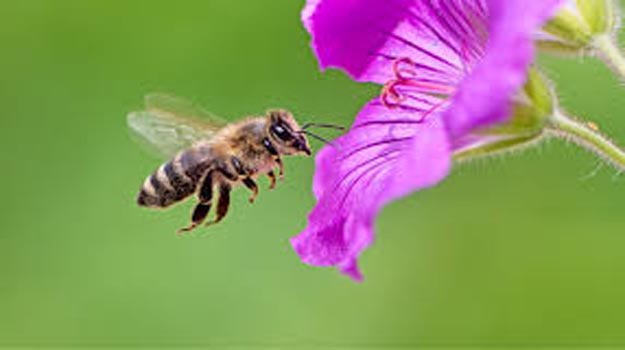
Pakistan is home to four major bee species such as apis cerana (small native bee), apis dorsata (wild bee), apis florea (little bee) and apis mellifera, the imported species introduced in 1977 that now dominates commercial production and these bees populations was threatened by IWT suspension by India.
While apis mellifera can yield 20–25 kilograms of honey per box twice a year, he said it is highly sensitive to environmental or water stress. “Even minor climate shocks or water shortages can sharply reduce its yields.”
Each year in spring season, Hussain shifts his colonies to river-fed regions especially Azad Kashmir. Last summer, flooding of the Kabul River has badly affected his small bees farm in Mohib Banda Nowshera.
“I had to move quickly to Azad Kashmir to save what I could,” he recalled. “We go where there is water, bees flora plants and flowers.”
Beekeepers from KP also migrate to Punjab districts including Sialkot, Gujrat, Gujranwala, Mandi Bahauddin, Jhang and Multan along the Chenab River, and to Muzaffarabad, Mirpur and Jhelum along the Jhelum River. These areas, enriched by afforestation drives, provide essential nectar sources to millions of bees population.
Industry leaders feared that prolonged uncertainty over water access under IWT could ripple through Pakistan’s agricultural economy, affecting staple crops, orchards and export-oriented honey production.
Sher Zaman, General Secretary of the All Pakistan Beekeepers Association, warned that Pakistan’s prized ber and phulai honey exports to Saudi Arabia, UAE, United States, China, Azerbaijan and Malaysia could face serious decline amid IWT suspension by India, exposing thousands of rural families to financial distress.
Despite mounting challenges, apiculture remains a pillar of the rural economy of Pakistan. Experts estimated that if Pakistan reaches its potential production of 70,000 metric tons annually, the sector could generate Rs 43 billion in revenue and create over 100,000 jobs.
But beyond economics lies a deeper ecological truth. Bees are critical pollinators, responsible for nearly one-third of global food production. Fruits such as apples, almonds and cucumbers rely heavily on pollination. “Bees are guardians of our ecosystem,” Khalil said quietly.
“Losing them would not just end an industry in Pakistan but it would threaten food supply, agriculture and honey produce globally besides increased desertification.”
Travellers along the Islamabad–Peshawar Motorway and the Indus Highway already witness expanding stretches of dry land in Swabi, Mardan, Karak and Dera Ismail Khan that is stark reminders of drought and desertification.
As erratic rainfall and prolonged dry spells intensify, beekeepers of KP find themselves on the frontline of environmental uncertainty.
They are calling for uninterrupted river flows, climate-smart agricultural policies, plantation of nectar-producing trees, disease management support, interest-free loans and formal recognition to ease seasonal migration.
For Hussain Khan, the suspension of IWT by India is deeply deplorable and tantamount to destroying the honey production of Pakistan. Watching his truck disappear toward Azad Kashmir, he reflected softly. “When flowers bloom, the bees sing. But if the water stops, the bees die. And if the bees die, what will happen to us?” ( Fakhar e Alam)