Nearly 10000 Pakistani children face cancer each year amid care gaps
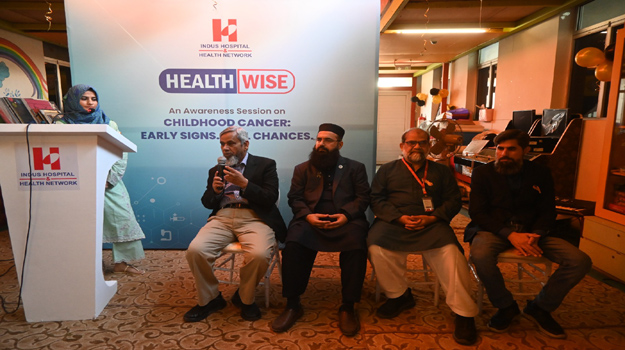
Karachi: Nearly 10,000 children in Pakistan are diagnosed with cancer each year, but fewer than 30 percent survive, according to health experts who warn that delayed diagnosis and limited access to specialized treatment remain critical barriers to care. The figures were shared during the second session of “HealthWise,” a quarterly media engagement initiative organized by the Indus Hospital & Health Network (IHHN). The forum focused on childhood cancer and emphasized the role of early detection in improving survival outcomes.
Globally, an estimated 400,000 children and adolescents develop cancer annually, with nearly 80 percent of cases occurring in low- and middle-income countries. While survival rates exceed 80 to 85 percent in high-income nations, outcomes in developing countries remain significantly lower due to gaps in early diagnosis, trained specialists and supportive care. “Unlike adult cancers, most childhood cancers are not linked to lifestyle factors and often have no clear cause,” said Dr. Naeem Jabbar, a pediatric hematology-oncology specialist. “With timely and appropriate treatment, cure rates can reach up to 85 percent.” Medical experts cited delayed recognition of symptoms, shortage of trained professionals, limited specialized centers and high rates of treatment abandonment as key contributors to Pakistan’s low survival rate. The most common childhood cancers include leukemia, lymphoma, brain and spinal cord tumors, bone tumors, soft tissue sarcomas, neuroblastoma, Wilms tumor and retinoblastoma. Treatments such as chemotherapy, surgery and radiotherapy are widely considered effective when initiated early. Responding to questions from journalists, Dr. Shamvil Ashraf, a consultant in pediatric oncology and executive director of medical services at IHHN, said that late presentation of cases remains one of the most pressing challenges.
“Many families reach specialized centers when the disease is already advanced,” he said. “Community-level awareness is critical to improving survival outcomes.” According to hospital data shared at the session, approximately 1,000 new pediatric cancer cases are registered each year at its Karachi facility. Since 2014, more than 16,000 children have received treatment, with about 1,300 undergoing active care at any given time. Dr. Ashraf noted that the financial burden of cancer treatment can be devastating for families. A single chemotherapy session costs roughly $25, or about 7,000 Pakistani rupees, while full treatment can reach $6,000 — more than 1.6 million rupees. At IHHN facilities, treatment is provided free of charge. Addressing common misconceptions, Dr. Muhammad Rafie Raza said childhood cancer is neither contagious nor caused by actions of the child or parents. “Cancer does not always mean death,” he said. “Early diagnosis and proper treatment significantly improve recovery chances.” To broaden access beyond Karachi, IHHN has introduced a Shared Care Model aimed at decentralizing pediatric oncology services. Since 2023, more than 400 patients have been jointly managed at shared care centers across Sindh, while over 1,000 patients have received coordinated care at the Pediatric Oncology Unit in Quetta since 2021.
Through partnerships with public hospitals — including SKBZ Hospital Quetta, DHQ Badin, Mother & Child Hospital Nawabshah, Sheikh Zaid Children Hospital Larkana, Dr. Zeenat Issani Institute Shikarpur and Civil Hospital Karachi — pediatric oncology units have been established to extend specialized services to underserved regions. Health experts at the session urged parents, teachers, healthcare providers and journalists to play a proactive role in raising awareness about early warning signs. “Early detection saves lives,” Dr. Ashraf said. “Every child deserves a fair and equal chance at life.”