No impact on low-income consumers from solar policy change: Leghari
Says out of total solar capacity of 20,000-22,000 megawatts, only 6,000 megawatts are linked to solar metering
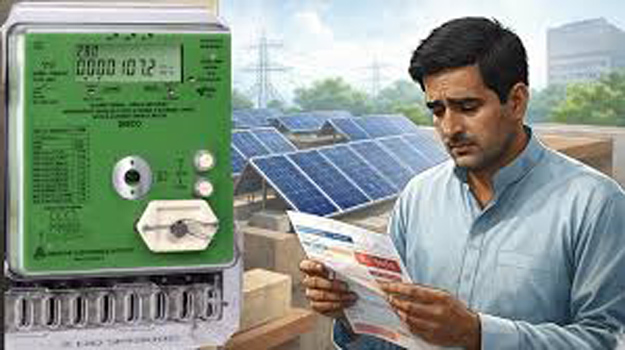
ISLAMABAD: Energy Minister Awais Leghari on Thursday told the National Assembly that only a small fraction of solar consumers would be affected by the government’s decision to replace the net metering system with net billing, stressing that the policy change would not burden the common man.
Responding to a point of attention raised by Pakistan Peoples Party (PPP) lawmaker Sharmila Faruqui, he said that out of Pakistan’s total installed solar capacity of 20,000 to 22,000 megawatts, only around 6,000 megawatts are linked to net metering.
As a result, he said, just 600,000 to 700,000 consumers – about eight to ten per cent of total solar users – would be impacted. “There will be no impact on lower-income consumers,” he assured the House.
The minister recalled that he had introduced the net metering system in 2017 and that it had since undergone four to five regulatory changes. He acknowledged widespread debate and criticism of the recent revisions, including opposition from members of his own party.
However, he rejected claims that the new regulations were anti-solar, explaining that reducing the profit margin of net-metered consumers from 50 per cent to 37 per cent was not an anti-people measure. “Is that so bad?” he asked, stressing that “no one was going to incur any losses”.
The minister added that the proposed regulation had retained the purchase rate for existing users at Rs27 due to “contractual obligations”, though he acknowledged this had “sparked another debate”.
He said net-metering consumers had questioned the disparity, asking why electricity bought from them at Rs27 was sold back at Rs45–65 per unit.
Responding to the criticism, the minister argued the comparison was misleading. He said that when electricity generated from hydel, solar, wind, nuclear, gas, and coal sources was combined, the average cost stood at Rs8.31 per unit — making the Rs27 rate difficult to justify.
He added that 55 per cent of electricity generated during 2024-25 came from clean energy sources and said Pakistan was confident of meeting its international commitment to raise this share to 60 per cent by 2030 – possibly even earlier. The minister said Pakistan will become a 90 per cent clean energy country in terms of power generation by 2034. PR