OIC wants definitive settlement of Kashmir, Palestine disputes: Ambassador Opeloyeru
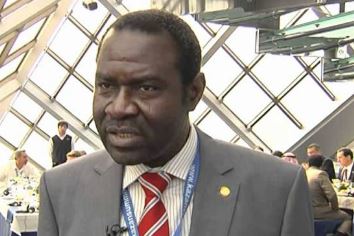
NEW YORK: Ambassador Hameed Opeloyeru, the Permanent Observer of the Organization of Islamic Cooperation (OIC) to the United Nations, has reaffirmed the OIC’s firm stance that definitive, peaceful settlements for the disputes in Kashmir and Palestine must be achieved in accordance with relevant United Nations Security Council (UNSC) resolutions.
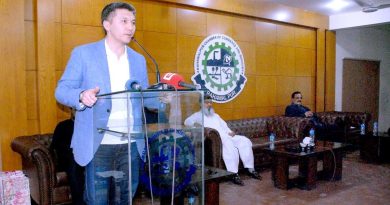
Ambassador Hameed Opeloyeru during a side-event on the margins of 64th commission on Social Development in the United Nations headquarter said, “It is apparent that war and conflicts pose greater challenges to socio-economic development. This is evident in the attendant loss of lives among the civilian population and the vulnerable segments, including women, children, youth and people living with disabilities, and the displacement of the civil population, coupled with the extensive damage to physical and social infrastructure.”
He added that the OIC maintains a strong peace-building support architecture. This is evident in the mandate of its Contact Groups on Palestine, Muslims in Europe, Rohingya, Jammu and Kashmir, and Afghanistan.
Ambassador Opeloyyeru underscored the OIC peace-building and social development efforts, aimed at addressing the issues bearing on restoration of the inalienable national rights of the Palestinian people, the definitive settlement of the Jammu-Kashmir dispute in accordance with the UN Security Council resolutions, and the restoration of the national rights of the Rohingya people of Myanmar, among other flashpoints in OIC member states.
In his opening remarks, Ambassador Asim Iftikhar Ahmad, who also presided over the event, said that for the people of IIOJK, occupation is a permanent condition spanning over more than seven decades, which has affected every facet of their daily lives: from education to employment, to mobility, to freedom of expression, and even to hope itself.
Describing Kashmiris’ lived reality under the shadow of over one million Indian forces as one of interrupted childhoods, constrained aspirations, and a future held hostage by uncertainty, he said that when dignity is denied and voices silenced, development becomes an illusion rather than a promise.
Ambassador Asim said civilian life in Jammu and Kashmir has been subjected to extraordinary militarization. “Enforced disappearances, extrajudicial killings, arbitrary detentions, and pervasive impunity have left families fractured and communities traumatized. These practices have inflicted deep psychological scars, eroded trust, and damaged the social fabric of the Kashmiri society,” Ambassador Asim stated.
Ambassador Ahmet Yildiz, Turkish Permanent Representative and the Chair of OIC-CFM, said, “We advocate a fair and lasting resolution for the Kashmir issue in line with the UN Charter and relevant UN Resolutions that would restore peace and stability in the region through dialogue between the parties.” He said that achieving peace and development in Jammu and Kashmir will, at the same time, contribute to the overall prosperity and sustainable development in South Asia and beyond.
Ambassador Yildiz cited Jammu and Kashmir as one of the examples of conflict-affected regions where almost eight decades of dispute has left a huge social development challenge for the Kashmiri people. He said that prolonged tensions, ongoing human rights violations, economic hardships and infrastructural deficiencies in the region are further deepening the humanitarian dimension of the problem.
“As we observe Kashmir Solidarity Day today, we would like to emphasize that the expectations of the Kashmiris must be fulfilled for a lasting peace. The resolution of the Kashmir issue is vital for ensuring social and economic development for Kashmiri people,” Ambassador Yildiz added.
Ambassador Tofig F. Musayev, Permanent Representative of Azerbaijan to the UN, highlighted the severe social and humanitarian consequences of conflict and occupation, including displacement, food insecurity, disrupted education, and lasting psychological harm, particularly to children. He maintained that Azerbaijan has always stood with the people of Palestine and people of Kashmir to achieve their right to self-determination as mandated under UN Security Council resolutions.
Dr. Ghulam Nabi Fai, Chairman of World Forum for Peace and Justice, stressed that sustainable social development in Jammu and Kashmir is impossible under conditions of prolonged occupation, militarization, and insecurity. Monitoring Desk