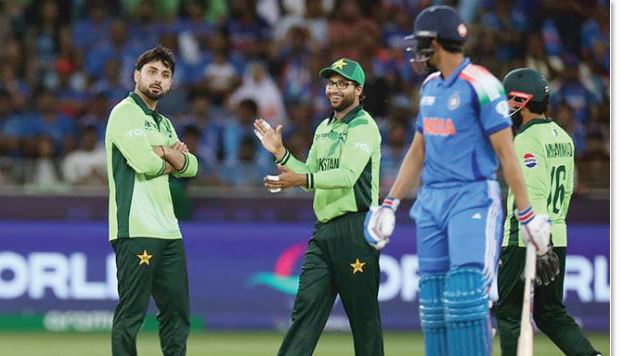
T20 World Cup: ICC seeks ‘backchannel talks’ after Pakistan boycott India match
LAHORE: In the aftermath of Pakistan’s announcement against playing their T20 World Cup 2026 match against India, the International Cricket Council (ICC) has asked its Deputy Chairman Imran Khwaja to hold back-channel negotiations with the Pakistan Cricket Board (PCB).
Khwaja, who represents the Singapore Cricket Association and is seen within the ICC as a neutral figure who can talk to all sides, has been asked to convince Pakistan to play their T20 World Cup 2026 group match against India on February 15 in Colombo, Sri Lanka, reported Firstpost.
The report comes as the Pakistani government, on Sunday, announced that it would participate in the T20 World Cup 2026 but would boycott the match against arch-rival India.
According to media reports, Pakistan had decided to boycott the February 15 match to show solidarity with Bangladesh, whom the ICC kicked out of the tournament. The ICC had rejected the Bangladesh Cricket Board’s (BCB) request to move their matches to a venue outside India. The BCB had sought the change following the removal of Bangladesh pacer Mustafizur Rahman from the Indian Premier League (IPL) on the instructions of the Indian cricket board, a move that sparked widespread outrage in Bangladesh.
The cricketing body then replaced Bangladesh with Scotland in the tournament, stating that it was not feasible to revise the schedule so close to the February 7 — start of the World Cup. Meanwhile, multiple other factors influenced Pakistan’s decision to boycott the match, including ICC’s perceived biased stance towards Bangladesh playing a central role, with government sources noting that the Pakistani team was instructed not to take the field against India on February 15 as “a form of protest”. The sources said that ICC chief Jay Shah’s partial decisions had effectively turned the International Cricket Council into an extension of the Indian cricket board. They further said that these biased decisions have undermined the principles of fairness and equality, accusing the ICC of applying different standards to different countries on its platform. Since then, the ICC, in its statement, has expressed hope that the Pakistan Cricket Board (PCB) would work towards a “mutually acceptable resolution”. While recognising the prerogative of national governments, the ICC publicly urged the PCB to reconsider, arguing that the decision harms the sport and its global fanbase. The council encouraged the Pakistani board to pursue a mutually acceptable solution that protects the interests of all stakeholders in the game, saying that the boycott decision was not “in the interest of the global game or the welfare of fans worldwide, including millions in Pakistan”. Staff Report