Jamaat-e-Islami Leadership Visits Gwadar Municipality, Pledges Support for “Clean and Green” Vision 2026
Gwadar’s Development and Demographic Challenges Take Center Stage During High-Level Briefing
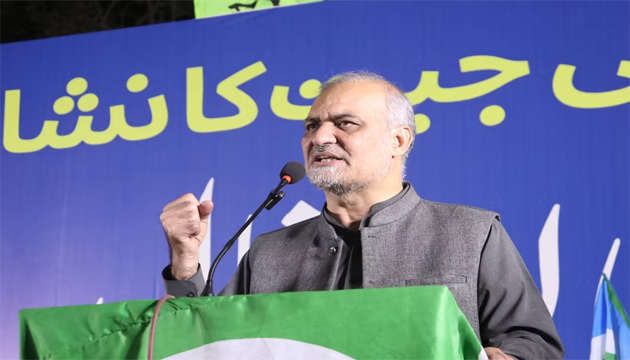
QUETTA: In a significant move underscoring its commitment to local governance and urban development, Jamaat-e-Islami Pakistan’s Amir, Engineer Hafiz Naeem-ur-Rehman, conducted a detailed visit to the Municipal Committee of Gwadar. He was accompanied by Jamaat-e-Islami Balochistan’s Amir and MPA Maulana Hidayat-ur-Rehman Baloch, alongside a delegation from the Al-Khidmat Foundation. The visiting dignitaries were formally received upon arrival by Chairman of the Municipal Committee Gwadar, Majid Johar, Chief Municipal Officer Maktoum Musa, and local councilors.
The visit included an extensive tour of the municipality’s various departments. Chairman Majid Johar and Chief Officer Maktoum Musa subsequently briefed Amir Jamaat-e-Islami on critical matters of local governance, ongoing office beautification projects, and the strategic “Gwadar Municipality Vision 2026.” The comprehensive briefing covered the municipality’s development strategy, administrative structure, and the multifaceted challenges it confronts.
Chairman Majid Johar provided critical context, stating that local governance affairs had been stagnant historically, with an unclear division of powers between the Gwadar Development Authority (GDA) and the Municipal Committee. He emphasized that overcoming these institutional hurdles requires a cohesive and collaborative approach from all stakeholders. To this end, a concerted joint effort involving the Municipal Committee Gwadar, District Administration, GDA, and the Gwadar Port Authority (GPA) is being mobilized for the city’s integrated development.
To enhance service delivery, the municipality has strategically divided Gwadar into three operational zones: the Southern part, encompassing the old population; the Central part, covering markets and commercial areas; and the Northern part, which includes newly settled areas. Officials revealed that according to the 2023 census, the population of Gwadar Municipality stands at approximately 70,000. This figure has raised concerns, as demographic data shows the population was around 70,000 in 1998, rose to 90,000 in 2017, and has now declined back to 70,000. Authorities warned that if this negative trend continues unchecked, Gwadar’s population could potentially plummet to between 40,000 and 50,000 within the next decade.
The briefing also shed light on severe municipal resource shortages. Notably, the Gwadar Municipality extends its services, including fire brigade and other emergency responses, to adjacent union councils of Serbandan, Pishkan, and Kontani. However, it operates with critically insufficient resources. Currently, only one sanitary inspector and one supervisor manage 40 wards, whereas the requirement is for at least four inspectors, eight supervisors, and forty rickshaws for garbage collection; only fourteen rickshaws are currently operational. Similarly, dumpers and other essential machinery are far fewer than needed. With Gwadar generating approximately 120 tons of solid waste daily, managing this volume with existing resources presents a monumental challenge.
In response, the municipality’s Vision 2026 aims to transform Gwadar into a “Clean and Green” model city, declaring 2026 as Gwadar’s year of transformation. Initiatives under this vision include digitizing the cleanliness complaint registration system for citizens and consulting with the Pakistan Navy and experts from the New International Airport for specialized fire brigade staff training.
Speaking on the occasion, Amir Jamaat-e-Islami, Engineer Hafiz Naeem-ur-Rehman, commended the municipality’s new office and modern systems but stressed that tangible, practical results on the ground are imperative. He proposed leveraging international NGOs and government environmental projects to achieve the “Clean and Green” goal and recommended forming a dedicated special team of eight to ten personnel responsible for daily street repairs, road patchwork, and cleanliness oversight. He highlighted that with the strong advocacy of MPA Maulana Hidayat-ur-Rehman, Gwadar possesses a potent voice that must be effectively utilized for the city’s betterment.
The Jamaat-e-Islami leadership assured full technical and training support to help transform Gwadar into a vibrant “city of lights,” akin to Karachi, aiming to realize the model city aspiration by 2026. In a pivotal announcement, it was declared that a sister-city agreement would be formalized between Gwadar and Karachi under Jamaat-e-Islami’s stewardship to foster mutual exchange of experience and expertise. The Jamaat-e-Islami Karachi team has affirmed its readiness for comprehensive cooperation with the Gwadar Municipal Committee in this transformative endeavor.