New Delhi must abandon its aggressive policies: Ex-CJCSC
ISLAMABAD: Former Chairman Joint Chiefs of Staff Committee(CJCSC) General (R) Zubair Mehmood Hayat, emphasized that India’s recent strategic assumptions have proven to be flawed and urged New Delhi to abandon its aggressive policies, including Operation Sindoor, in favor of diplomacy, realism, and restraint. He stressed that sustainable peace requires robust security preparedness and a credible defensive posture.
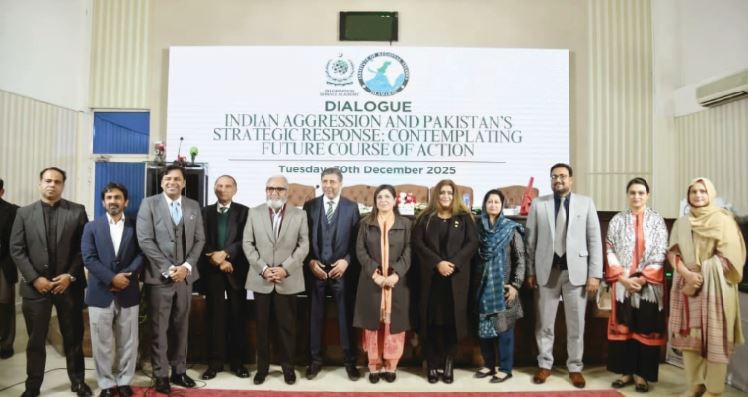
General (R) Zubair Mehmood Hayat made these remarks while addressing a joint event organized by the Information Service Academy (ISA) and the Institute of Regional Studies (IRS). He noted that the recent Pakistan-India tensions have brought significant changes to the regional security landscape, and Pakistan has achieved strategic, moral, and diplomatic successes against India. He added that Pakistan responded to India’s aggression effectively, even with limited resources, demonstrating that wars are not won on assumptions or dreams.
The former military chief described India’s current position as “tantamount to self-destruction,” highlighting a deadlock in India’s China policy and noting changes in Russia’s approach toward India. He also criticized the irresponsible reporting of “media loyalists,” saying it exposed their lack of accountability during the tensions. General Hayat reaffirmed that Pakistan will always retain its right to self-defense.
Opening the dialogue, ISA Executive Director General Ms. Imrana Wazir stressed the importance of informed and objective discourse amid escalating tensions in South Asia. She highlighted Pakistan’s strategic potential and the need for intellectual engagement to address emerging regional and global challenges.President of the Institute of Regional Studies and former Foreign Secretary,. jauhar Saleem, observed that the Kashmir issue remains unresolved and continues to impact regional security. He noted that following India’s Operation Sindoor, Pakistan defended its national security decisively. He further pointed out that India has used terrorism as a tool to weaken Pakistan, with evidence of funding for terrorist activities in Khyber Pakhtunkhwa and Balochistan. He acknowledged China’s positive role in promoting regional stability and diplomatic engagement.Other distinguished speakers included former Corps Commander General (R) Khalid Rabbani, former Foreign Secretary Mr. Aizaz Ahmed, and President of SASSI University, Dr. Maria Sultan, who shared insights on regional security, military preparedness, air power capabilities, and diplomatic strategies. Participants emphasized the need to maintain a strong military posture complemented by effective diplomacy to sustain peace in the region.
The dialogue concluded with an interactive session with students, fostering academic engagement and a deeper understanding of regional security challenges. Syed Naveed Jamal