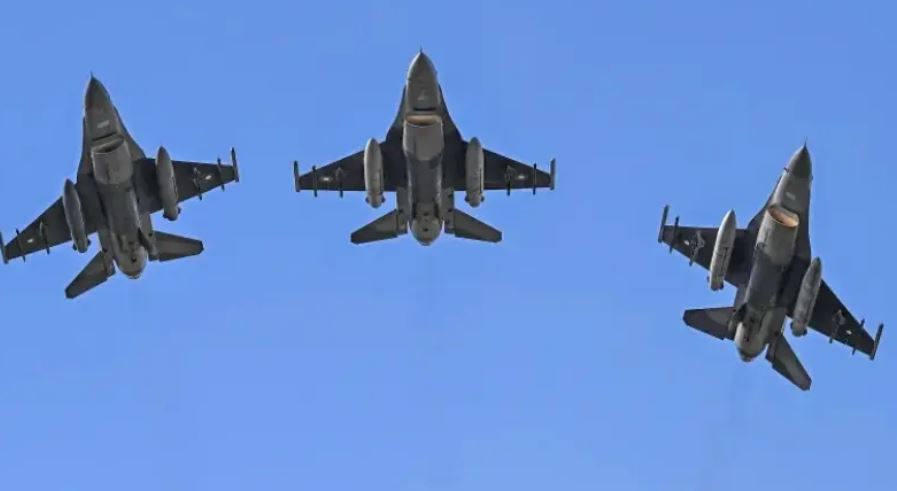
US package to keep Pakistan’s F-16s combat-ready through 2040, say analysts
ISLAMABAD: The $686 million defence package offered to Pakistan by US President Donald Trump’s administration this week will transform the country’s ageing fleet of F-16 fighter jets into a modernised force capable of operating securely and efficiently alongside contemporary air forces, according to defence experts and officials.
At its core, the upgrade will allow the F-16s to operate safely and effectively for at least another decade and a half by extending their service life, strengthening secure communications, enabling real-time sharing of tactical data, and ensuring sustained maintenance through comprehensive parts, training, and support.
Enhanced mission planning and testing tools included in the package will also improve pilot proficiency and overall mission effectiveness. Beyond specific equipment, a substantial portion of the package is devoted to spare parts, maintenance, engineering, and logistics support.
This includes replacement components, repair parts, technical documentation, engineering assistance, and logistics services. Training for pilots and maintenance personnel, along with simulators and technical manuals, is also included to ensure sustained proficiency as systems evolve.
According to analysts, the equipment the US has agreed to provide will make Pakistan’s F-16s fully networked, interoperable, and operationally viable well into 2040.
The Brussels-based International Crisis Group (ICG) has described the package as “a continuation of a long-standing relationship,” highlighting “the need to maintain Pakistan’s F-16 fleet for regional stability, despite India’s concerns over its use against New Delhi”.
ICG analyst Praveen Donthi told Al Jazeera that “extending support for Pakistan’s jets remains a core part of US-Pakistan ties, with continuity from the Biden to the Trump administration”.
He added that the package includes advanced technologies and new avionics to keep the jets combat-ready until 2040 — a move India views as potentially strengthening Pakistan’s offensive capabilities.
According to Janes, a leading global provider of defence and security analysis, “the inclusion of Link-16 in the Fighting Falcons of the Pakistan Air Force (PAF) would allow the aircraft to access networked information from command centres and ground units, enhancing their combat capabilities”.
Michael Kugelman, a Washington-based South Asia specialist, has said in interviews with several news outlets that while “the optics of the deal might suggest leverage” and could serve as a pressure point in US-India trade and defence negotiations, the package “has a logic of its own,” rooted in long-standing US support for Pakistan’s American-made aircraft.
Data from the Stockholm International Peace Research Institute (SIPRI) places the deal in a broader strategic context.
In a report released earlier this year, it said that between 2020 and 2024, more than 80 per cent of Pakistan’s weapons imports came from China, reflecting Islamabad’s growing reliance on Beijing for major defence platforms.
Chinese J-10 fighter jets played a prominent role in the May conflict, and Pakistan continues to diversify its air power in ways that reduce dependence on the United States.
A letter by the US Defence Security Cooperation Agency (DSCA) sent to Congress on December 8 regarding the sale stated that it “will support the foreign policy and national security objectives of the United States by allowing Pakistan to retain interoperability with US and partner forces in ongoing counterterrorism efforts and in preparation for future contingency operations”.
The letter noted that it will “maintain Pakistan’s capability to meet current and future threats by updating and refurbishing its Block–52 and Mid Life Upgrade F–16 fleet.”
It added that the updates will provide more “seamless integration and interoperability between the Pakistan Air Force and the US Air Force in combat operations, exercises, and training, and refurbishment will extend the aircraft life through 2040 while addressing critical flight safety concerns”.
The letter also emphasised Pakistan’s readiness to absorb the technology, stating that the country “has shown a commitment to maintaining its military forces and will have no difficulty absorbing these articles and services into its armed forces.” It also addressed regional concerns, asserting that “the proposed sale of this equipment and support will not alter the basic military balance in the region.” Monitoring Desk