Absence of political trust between India & US highlighted at Congress hearing
US hearing notes Trump hails Pakistan as ‘key partner’ even as his administration courts India
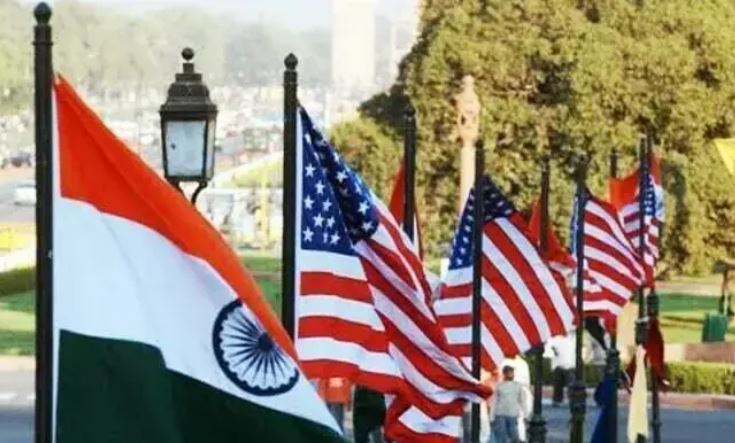
WASHINGTON: A US congressional hearing this week noted that President Donald Trump has repeatedly described Pakistan as a “key regional partner” even as his administration seeks to further strengthen ties with India.
The hearing — held by the House Foreign Affairs Subcommittee on South and Central Asia — also exposed sharp disagreements among lawmakers and analysts over the direction of Washington’s India policy. Witnesses warned during the hearing that tariff battles, visa restrictions and political mistrust had pushed the relationship into what several described as a “political standstill”.
Jeff Smith of conservative think tank The Heritage Foundation, long considered sympathetic to New Delhi, acknowledged that the partnership had entered “choppy waters”, attributing the downturn to Trump’s sweeping 50 per cent tariffs on Indian goods and India’s discomfort over US engagement with Pakistan after the May conflict between India and Pakistan.
Smith noted that the Trump administration’s messaging during the ceasefire between India and Pakistan had placed Prime Minister Narendra Modi in a “difficult position at home”, with critics accusing him of “bending to the will of the US”.
Republican scepticism — usually muted when it comes to India — was unusually sharp. Congressman Mike Baumgartner of Washington state questioned whether India was genuinely committed to deepening defence cooperation with the United States. He recounted browsing a book on the Indian Army during a recent visit to India and finding a full-page photograph of Indian troops training with Russians while US-India exercises appeared only as a small boxed image. “The next time I go to India,” he said, “I’d like to see those pages reversed.”
His comments reflected a wider concern in Washington that despite two decades of US outreach, India continues to hedge strategically — maintaining close ties with Russia and participating actively in China-led forums such as the Shanghai Cooperation Organisation.
Committee Chairman Bill Huizenga opened the session by calling India a “defining partner for the 21st century”, praising its expanding naval posture in the Indo-Pacific, its role in the Quad, and cooperation in technology, counter-terrorism and energy. Yet he also acknowledged “understandable concerns” over Russian President Vladimir Putin’s recent visit to New Delhi and India’s involvement in multilateral platforms shaped by China. Huizenga accused Beijing of pursuing a “string of pearls” strategy to militarise ports across the Indian Ocean.
Democratic Congresswoman Sydney Kamlager-Dove issued the strongest warning, cautioning that Trump risked becoming “the president who lost India” because of escalating disputes over trade and immigration. She revealed that a US-India trade agreement had been on track for signature in July but was abruptly withdrawn by the White House. Instead, India was hit with 50pc tariffs — among the steepest applied to any US partner — and a 25pc tariff on India-linked Russian oil imports.
She criticised the newly announced $100,000 H-1B visa fee, noting that Indians hold nearly 70pc of such visas and form a crucial segment of the US technology and medical workforce. The combined effect of these decisions, she said, had frozen high-level engagement and forced the postponement of the Quad Leaders Summit.
Following the India-Pakistan May conflict, Trump praised Pakistan’s role in helping defuse tensions. Monitoring Desk