UNGA renews global resolve to end human trafficking; Pakistan urges tackling its roots
UNITED NATIONS: With human trafficking rapidly expanding and growing more technologically sophisticated, the UN General Assembly Tuesday adopted a sweeping Political Declaration reaffirming global resolve to end this crime, with Pakistan calling for addressing its root causes, especially economic disparities.
Adopting a resolution titled “2025 Political Declaration on the Implementation of the United Nations Global Plan of Action to Combat Trafficking in Persons”, the 193-member Assembly reiterated strong condemnation of trafficking in persons, which it said constitutes a serious crime and a grave offence to human dignity.
The Assembly committed to intensifying efforts to eliminate the demand that fosters trafficking, especially of women and children.
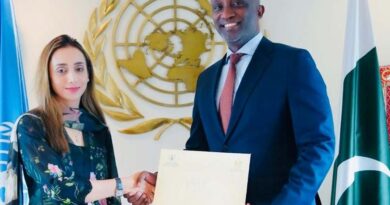
In his remarks, Pakistan’s Deputy Permanent Representative to the UN, Ambassador UsmanJadoon said that trafficking in persons continues to afflict societies and individuals alike, with armed conflicts, climate-induced disasters and economic disparities accentuating this phenomenon. In this regard, the Pakistani envoy highlighted the Increasing number of children falling victim to human trafficking.
Pakistan, he said, was simultaneously a country of origin, transit and destination for movement of persons, making it an issue of special importance.
“We emphasize the need to address its root causes – particularly economic disparities, limited legal pathways for regular migration, and conflict resolution and prevention,” Ambassador Jadoon said.
“Restrictive visa and border control regimes would only aggravate the existing challenges and push people to fall prey to human smugglers”.
Pakistan, he told the Assembly, is pursuing a two-pronged strategy by strengthening domestic measures and enhancing international cooperation that are aimed at ensuring stringent enforcement against human traffickers.
“While challenges persist, Pakistan remains resolute in its efforts,” the Pakistani envoy said, adding his government looks forward to further strengthening its cooperation with the international community.
At the outset, Assembly President AnnalenaBaerbock said, “Throughout history, humanity’s darkest impulse has been the exploitation of others for profit or power, and though societies have advanced, this impulse has not disappeared.”
This crime now appears under new names — human trafficking, sexual exploitation, forced labour, and child and forced marriage — and increasingly enabled by digital tools. “We are not talking about victims, we are talking about survivors — heroes — the strongest fighters for human rights,” she said.
Focusing on solutions, the Assembly president stressed the need for strong, enforced and comprehensive legislation, especially as women and girls make up 61 per cent of victims, and forced labour now accounts for 42 per cent of cases while only “17 per cent of convictions” address it. “We cannot turn a blind eye,” she stressed. APP