Asif urges ‘hard state’ approach to tackle extremist religious groups
Potential ban on TLP
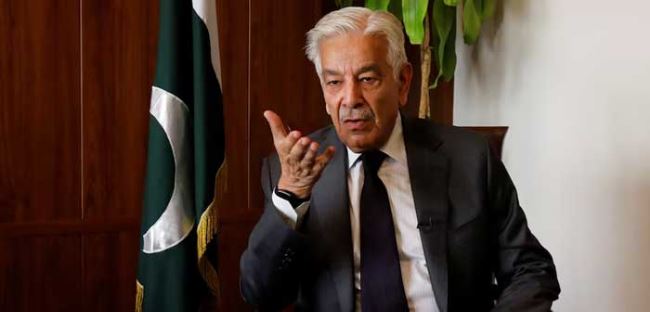
ISLAMABAD: Pointing towards violent protests of the Tehreek-e-Labbaik Pakistan (TLP), Defence Minister Khawaja Asif said on Tuesday that the country should act as a “hard state” to curb extremism, as religious extremist groups formed in the name of religion are unacceptable in any state.
His statement came days after the Punjab government sent a summary to the Centre seeking a ban on TLP after violent demonstrations in the province left many dead and scores injured.
Although the group was not named in official statements, the provincial government had vowed that individuals involved in spreading violence, inciting hatred, or causing public harm would be arrested and prosecuted under anti-terrorism laws.
Speaking to a private TV channel, Asif declined to comment on whether a ban was being imposed on the TLP.
“We have to become a hard state,” said Asif, adding that such religious extremist groups, which resort to violence and cause damage to property, cannot be tolerated in Pakistan.
He said that it was too late as such groups had been formed and encouraged for decades, adding: “Everyone knows who created them and for what purpose.”
Asif asserted that from now on, the state would function strictly in accordance with the law, rules, and the Constitution.
The defence czar said that he was unaware of Jamiat Ulema-e-Islam-Fazl (JUI-F) chief Maulana Fazlur Rehman’s statement about his workers being ready to march towards Islamabad.
He added that Fazl was “highly respectable” to him and refrained from commenting further.
The JUI-F chief — once a close ally of the Pakistan Muslim League-Nawaz (PML-N) and the Pakistan Peoples Party (PPP) — later turned into a vocal critic of the incumbent government.
The Nawaz Sharif and the Bilawal Bhutto-led parties had joined hands to form coalition governments twice after the ouster of former prime minister Imran Khan through a no-confidence motion in 2022. Following the 2024 general elections, Fazl rejected the formation of the coalition government, alleging widespread electoral rigging and irregularities. Monitoring Desk