Experts at CASS urge broader, balanced approaches in critical terrorism studies
Webinar on ‘Methodologies in Critical Terrorism Studies’
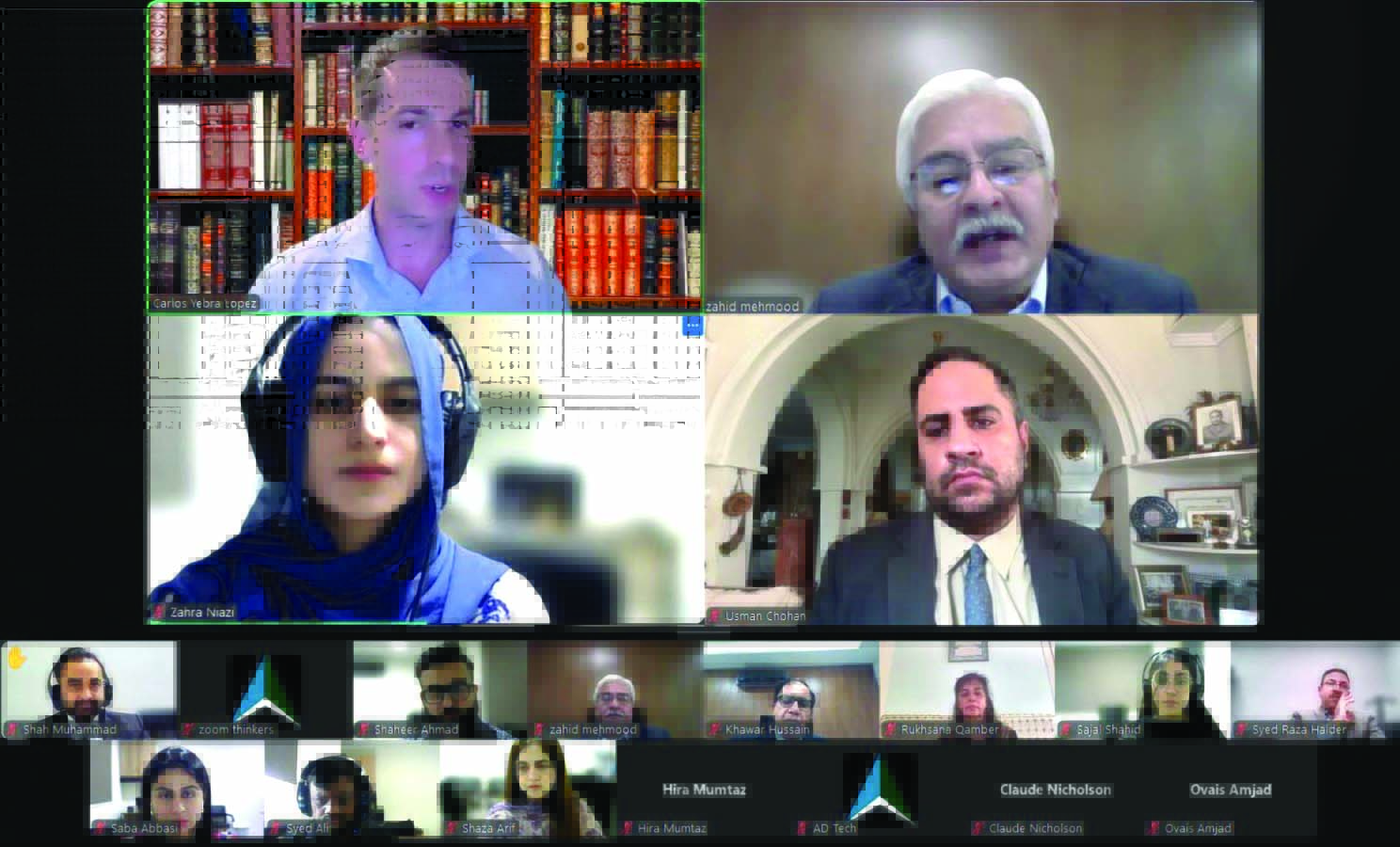
ISLAMABAD: The Centre for Aerospace & Security Studies (CASS), Islamabad, organised a webinar on the book “Methodologies in Critical Terrorism Studies: Gaps and Interdisciplinary Perspectives” under its Author’s Talk Series. The session was attended by scholars, students, and practitioners interested in the evolving academic approaches to national security and counterterrorism.
Introducing the author, Mr. Carlos Yebra Lopez, Dr. Usman Chohan, Advisor to the President CASS, lauded his contributions to Critical Terrorism Studies. He underlined that Pakistan has lived under the shadow of terrorism for decades, which makes it imperative to understand the methodologies underpinning research in this crucial field.
In his address, Mr. Lopez traced the evolution of terrorism as a modern phenomenon emerging alongside mass media, citing the 1972 Munich attack as a defining moment that spurred U.S. government initiatives such as the “Cabinet Committee to Combat Terrorism,” eventually leading to the formal establishment of Terrorism Studies as an academic discipline.
He noted that the field experienced significant growth after 9/11, yet its theoretical, ethical, and methodological limitations soon became evident. Mr. Lopez outlined four major critiques of traditional Terrorism Studies — ontological, methodological, political, and cultural — that gave rise to Critical Terrorism Studies. He identified key gaps in the discipline, including an overreliance on discourse methods, a lack of quantitative analysis, limited self-reflexivity, and the underrepresentation of Global South perspectives. He also highlighted the scarcity of post-colonial frameworks in terrorism research, noting that the field remains dominated by voices from the Global North.
Concluding the session, Air Marshal Zahid Mehmood (Retd), Senior Director CASS, emphasized the importance of distinguishing between Terrorism Studies and Critical Terrorism Studies. He urged scholars and institutions to promote dialogue that reflects diverse perspectives and objective inquiry, free from prevailing biases. He pointed out that despite the global nature of terrorism, literature from the Global South remains limited, allowing stereotypes—particularly those linking terrorism with Islamist movements—to persist unchallenged. He encouraged young researchers to fill this gap through rigorous, balanced scholarship.
The event concluded with an interactive Q&A session, during which participants discussed various aspects of the book and its relevance to contemporary security discourse. Staff Report