World Bank-backed Transport Plan aims to fix Karachi’s mobility woes: Sindh CM
Staff Report
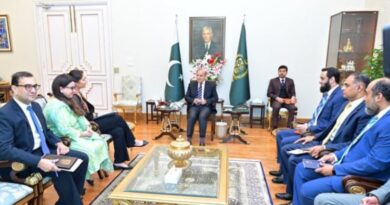
KARACHI: Sindh Chief Minister Syed Murad Ali Shah on Friday said that his government, in collaboration with the World Bank, will develop the Karachi Transport Master Plan to address the metropolis’ mobility crisis.
The plan will integrate Bus Rapid Transit (BRT) systems, metro light rail, and the revival of Karachi Circular Railway, offering modern, sustainable transport solutions for the city, the CM House said in a handout.
The announcement came during a meeting held at the CM House, with a high-level World Bank delegation led by Practice Manager for Transport in the Middle East, North Africa, and Pakistan Ibrahim Khalil Zaki.
The delegation included Lead Transport Economist Georges Bianco, Senior Transport Specialists Frederico Ferreira, Papa Modou, and Ms Magalie, along with other officials.
The chief minister was joined by Sindh Transport Minister Sharjeel Inam Memon, Planning and Development Minister Syed Nasir Hussain Shah, Chief Secretary Asif Hyder Shah, Chairman Planning and Development Najam Shah, Secretary to CM Raheem Shaikh, and Secretary Transport Asad Zamin.
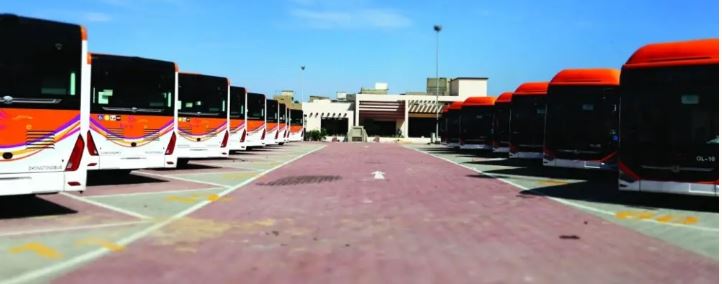
CM Murad described the World Bank as “a vital development partner” and said the Master Plan would expand cooperation beyond the Yellow Line BRT. He stressed that Karachi needs at least 15,000 buses to meet daily demand and noted that while BRT corridors are essential, they must be complemented with metro light rail and circular railway systems. He also highlighted Sindh’s introduction of electric buses as a major climate-friendly initiative.
Zaki assured full technical and financial support from the World Bank for the Master Plan, which would include multiple modes of transport such as BRTs, metro rail, tourist trains, goods trains, and the Karachi Circular Railway. He further underscored the importance of developing a transport industry in Karachi, not only to serve the city but to meet national demand. In response, CM Murad offered Dhabeji as a dedicated hub for establishing the industry, pledging full support to investors.
It was agreed in the meeting to establish a joint working group that will finalise the Terms of Reference for transport experts tasked with preparing the Master Plan. The group will comprise members from both the Sindh government and the World Bank and will be formally notified by the chief secretary. Calling it “big news for Karachi,” the CM said the partnership would pave the way for a long-term solution to the city’s transport challenges.
Turning to the Yellow Line BRT project, Murad noted that its completion, along with other BRT corridors, would transform Karachi’s urban mobility. It is being financed jointly by the World Bank, the Sindh government, and the private sector.
Sharjeel, discussing the BRT Yellow Line project, said that stretching 21 kilometres from Dawood Chowrangi to Khalid Bin Waleed Road, the project includes 21 at-grade stations, four underpasses, four elevated stations, eight flyovers, and three underground stations. It is expected to carry 300,000 passengers daily upon completion in December 2025.