Saudi cabinet reviews regional developments, backs Gaza ceasefire
RIYADH: The Saudi cabinet on Tuesday emphasized the Kingdom’s role in addressing the humanitarian crisis in Gaza, reviewing its ongoing diplomatic efforts to secure a ceasefire, facilitate the delivery of relief and aid, and support the two-state solution.
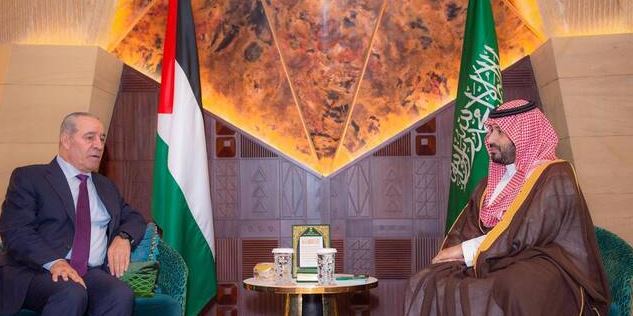
Chaired by Prince Mohammed bin Salman, the session also covered a message from Russian President Vladimir Putin and a meeting with Palestinian Vice President Hussein Al-Sheikh.
Minister of Media Salman bin Yousef Al-Dosari told the Saudi Press Agency that the cabinet reviewed developments in the occupied Palestinian territories and reaffirmed the importance of the joint statement issued by the foreign ministers of Saudi Arabia and Italy.
The statement called for an immediate cessation of hostilities in Gaza, condemned measures that undermine the two-state solution, and renewed the countries’ commitment to achieving a just, secure, and comprehensive peace in the Middle East.
How violence, hunger, and missed education are erasing an entire generation in Gaza
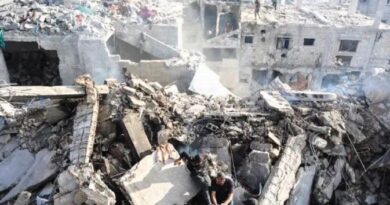
Instead of walking to school or playing in the park, Gaza’s children run from bombs. At night, many sleep on bare ground with only a thin sheet separating them from skies lit by explosions. Parents say their children no longer dream of toys but of bread and a warm bed.
While many toddlers around the world are learning to take their first steps and speak their first words, 18-month-old Mohammed arrived at the Patient’s Friends Benevolent Society Hospital in Gaza City in July “nearly lifeless,” doctors diagnosed.
Under Israel’s blockade on humanitarian aid, the Palestinian toddler had lost a third of his body weight. He weighed just 6 kg, or about 13 pounds. Volunteers with MedGlobal, a US-based medical charity, said he was severely malnourished when they began treating him.
As his small body withered, “he stopped making happy sounds, stopped laughing, and instead started crying all day,” his mother told doctors. Amid the thunder of airstrikes and the collapse of daily life, her only focus was keeping him alive.
Mohammed’s case is just one among thousands. MedGlobal found that 16.8 percent of children under the age of 5 in four Gaza governorates are suffering acute malnutrition — a 2,000 percent increase from prewar levels.
In a report published on Aug. 21, the group said more malnutrition-related deaths occurred in July alone than in the previous six months combined. Today, one in six children under 5 is severely malnourished, compared to one in 125 before October 2023.
The UN children’s fund, UNICEF, said 5,119 children in Gaza aged 6 months to 5 years were diagnosed with acute malnutrition in May alone. This marks a 150 percent surge from February, when a fragile ceasefire allowed more aid into the enclave.
But when Israel escalated its bombing campaign in March and imposed a near-total closure, all supplies — food, medicine, fuel, water, and electricity — were cut off from the enclave’s 2 million residents. It was the longest complete blockade since the siege began.
Already, 100 children have died from starvation since October 2023, Save the Children said in early August, accusing Israel of deliberately starving Palestinians in Gaza — a claim Israel rejects, instead accusing Hamas of stealing aid and humanitarian agencies of distribution failures.
“What kind of a world have we built to let at least 100 children starve to death while the food, water and medical supplies to save them wait just miles away at a border crossing?” Ahmad Alhendawi, Save the Children’s regional director, said in a statement.
He accused Israel of “starving children by design.”
Inger Ashing, the group’s CEO, echoed that message in a speech before the UN Security Council on Aug. 28. “The Gaza famine is here. An engineered famine. A predicted famine. A man-made famine. As we speak, children in Gaza are systematically being starved to death.”
In November 2024, the International Criminal Court issued arrest warrants for Prime Minister Benjamin Netanyahu and former Defense Minister Yoav Gallant, alleging war crimes that include deliberate starvation. Israel also faces charges of genocide at the International Court of Justice.
Netanyahu insisted in July that no one in Gaza is starving. “There is no policy of starvation in Gaza, and there is no starvation in Gaza,” he said. “We enable humanitarian aid throughout the duration of the war to enter Gaza — otherwise, there would be no Gazans.”
On Aug. 22, the UN formally declared famine in Gaza City and surrounding areas. More than a quarter of the enclave’s population faces “catastrophic” hunger after nearly two years of what the UN called Israel’s “systematic obstruction” of aid.
About a week later, Israel’s military declared Gaza City a “dangerous combat zone” and launched another assault on the shattered remains of the enclave’s largest city.
The toll on children’s small bodies has been devastating. In June, Edouard Beigbeder, UNICEF’s regional director for the Middle East and North Africa, said 16,736 children had been diagnosed with malnutrition between January and May — an average of 112 per day.
“Every one of these cases is preventable,” he said in a statement. “The food, water, and nutrition treatments they desperately need are being blocked from reaching them.”
Hunger is compounded by displacement and trauma. Nearly half of Gaza’s displaced population of nearly 2 million are children. According to the Palestinian Central Bureau of Statistics, more than 39,000 children have lost one or both parents in the conflict. Agencies