UN rights office says Israeli settlement plan breaks international law
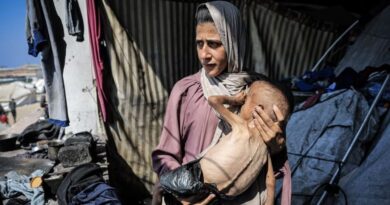
Hunger and heatwave plague Gaza Strip, says OCHA
Monitoring Desk
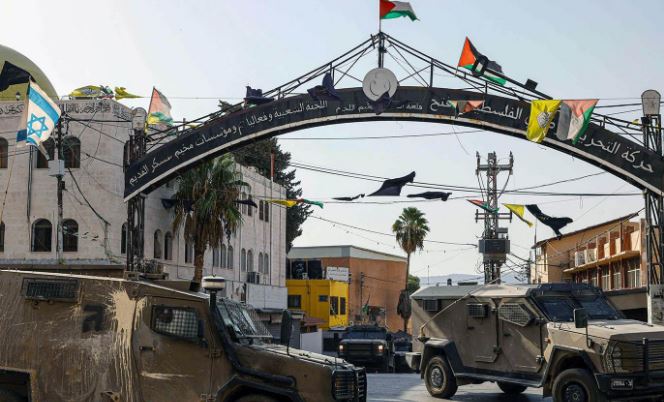
GAZA: The U.N. human rights office said on Friday an Israeli plan to build to build thousands of new homes between an Israeli settlement in the West Bank and near East Jerusalem was illegal under international law, and would put nearby Palestinians at risk of forced eviction, which it described as a war crime.
Israeli far-right Finance Minister Bezalel Smotrich on Thursday vowed to press on a long-delayed settlement project, saying the move would “bury” the idea of a Palestinian state.
The U.N. rights office spokesperson said the plan would break the West Bank into isolated enclaves and that it was “a war crime for an occupying power to transfer its own civilian population into the territory it occupies”.
About 700,000 Israeli settlers live among 2.7 million Palestinians in the West Bank and East Jerusalem. Israel annexed East Jerusalem in 1980, a move not recognised by most countries, but has not formally extended sovereignty over the West Bank.
Most world powers say settlement expansion erodes the viability of a two-state solution by breaking up territory the Palestinians seek as part of a future independent state.
The two-state plan envisages a Palestinian state in East Jerusalem, the West Bank and Gaza, existing side by side with Israel, which captured all three territories in the 1967 Middle East war.
Israel cites historical and biblical ties to the area and says the settlements provide strategic depth and security and that the West Bank is “disputed” not “occupied”
Meanwhile, as hunger and malnutrition deepen in the Gaza Strip, humanitarian missions continue to face delays and impediments, while scorching temperatures are adding to the suffering of the population, the UN aid coordination office, OCHA, said in its latest update.
Recently, Israel has denied fewer humanitarian movements but approved missions “still take hours to complete and teams have been compelled to wait on roads that are often dangerous, congested or impassable,” the report said.
Between 6 and 12 August, humanitarians made 81 attempts to coordinate planned movements with the Israeli authorities, including to transfer fuel and personnel.
Of this number, 35 were facilitated, 29 were initially approved but then impeded on the ground, 12 were denied and five had to be withdrawn by the organizers.
However, 14 of the missions that had faced obstructions eventually went ahead.
Nearly three years have passed since hostilities erupted in Gaza following the Hamas-led attacks on Israel which left roughly 1,200 people dead.
Some 250 others – both Israelis and foreigners – were taken hostage. It is believed that 50 people are still being held in Gaza, including some who have been declared dead.
Starvation in the enclave is now at its highest level since the conflict began, according to the World Food Programme (WFP).
The update cites the Gaza health authorities, who have documented 235 malnutrition-related deaths, including 106 children, as of 13 August.
Despite hunger spreading, aid convoys are limited each day and dangers persist as the trucks travel through the war-ravaged enclave.
“Additionally, desperate crowds often offload food supplies from trucks to feed their families – while looting also prevents aid from reaching its intended destinations,” OCHA said.