PM, president stress protecting minority rights, hail their patriotism
Rights of religious minorities still a distant dream, say speakers at seminar
Staff Report
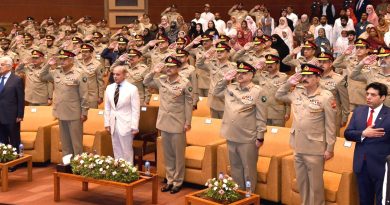
ISLAMABAD: Pakistani leadership, including President Asif Ali Zardari and Prime Minister Shehbaz Sharif, reaffirmed their commitment to protecting the rights of minorities while hailing their services to the country on Monday, in celebration of National Minorities Day.
National Minorities Day is celebrated on August 11 every year. It commemorates the historic speech by Quaid-i-Azam Muhammad Ali Jinnah, the founder of Pakistan, made on Aug 11, 1947, where he emphasised equal rights for all citizens regardless of religion. The day aims to highlight the religious and socio-economic rights of minorities in Pakistan.
In separate addresses on Monday, President Zardari and PM Shehbaz both reaffirmed their commitment to safeguarding and advancing the rights of minorities while acknowledging their contributions to the country.
The president reaffirmed his resolve to continue efforts to promote interfaith harmony, brotherhood and unity to build an inclusive and prosperous Pakistan.
“This day reflects Quaid-i-Azam Muhammad Ali Jinnah’s vision of a Pakistan where every citizen lives in equality, harmony, and mutual respect,” he said, according to a press release.
The president said that the Constitution guaranteed equal rights to all citizens “irrespective of religion, caste, creed, or colour”, and that it safeguarded the political, economic, religious, social and cultural rights of minorities.
“Pakistan stands resolutely against all forms of discrimination, extremism, and religious intolerance,” he stressed. “We remain determined to build a society free from prejudice — one that embraces diversity as a strength and is anchored in mutual respect, interfaith harmony, and shared progress.”
He added that the day was also an occasion to acknowledge the contributions of the minority communities to nation-building, saying that they had served the country with dedication in the armed forces, judiciary, civil services, education and healthcare.
Their patriotism and service remained a “source of pride for the entire nation”, he added.
The president noted measures taken by the country for the welfare and empowerment of minorities, including the establishment of the National Commission for Minorities, allocation of a Minorities Welfare Fund, restoration and preservation of places of worship and provision of scholarships and financial assistance to minority students.
“We continue to promote interfaith dialogue and ensure meaningful participation of minorities in every sphere of national life,” he added.
In a separate statement, PM Shehbaz also reaffirmed the government’s commitment to the full inclusion of minorities in government institutions, the parliament and the national mainstream while appreciating their role in the country’s development and progress.
“Pakistan is proud of its minorities’ patriotism, professional hard work and attachment to national heritage and culture,” he said.
“The welfare and well-being of all minorities in Pakistan, be they Sikhs, Christians, Hindus [or] Parsis, is one of the priority duties of the government of Pakistan,” the premier said.
He emphasised the services rendered by minorities “in every walk of life”, including those who had sacrificed their lives defending Pakistan.
“We pay tribute to them from the bottom of our hearts,” he said.
The PM also stressed that protecting minority rights, aside from a constitutional obligation, was also a religious duty. “Islam specifically advocates the protection of civil, religious and social rights of minorities. Ulema and religious leaders play a key role in protecting religious freedom,” he said.
He called on all Pakistanis to practise unity and solidarity, mutual respect and tolerance.
Rights of religious minorities still a distant dream, say speakers at seminar
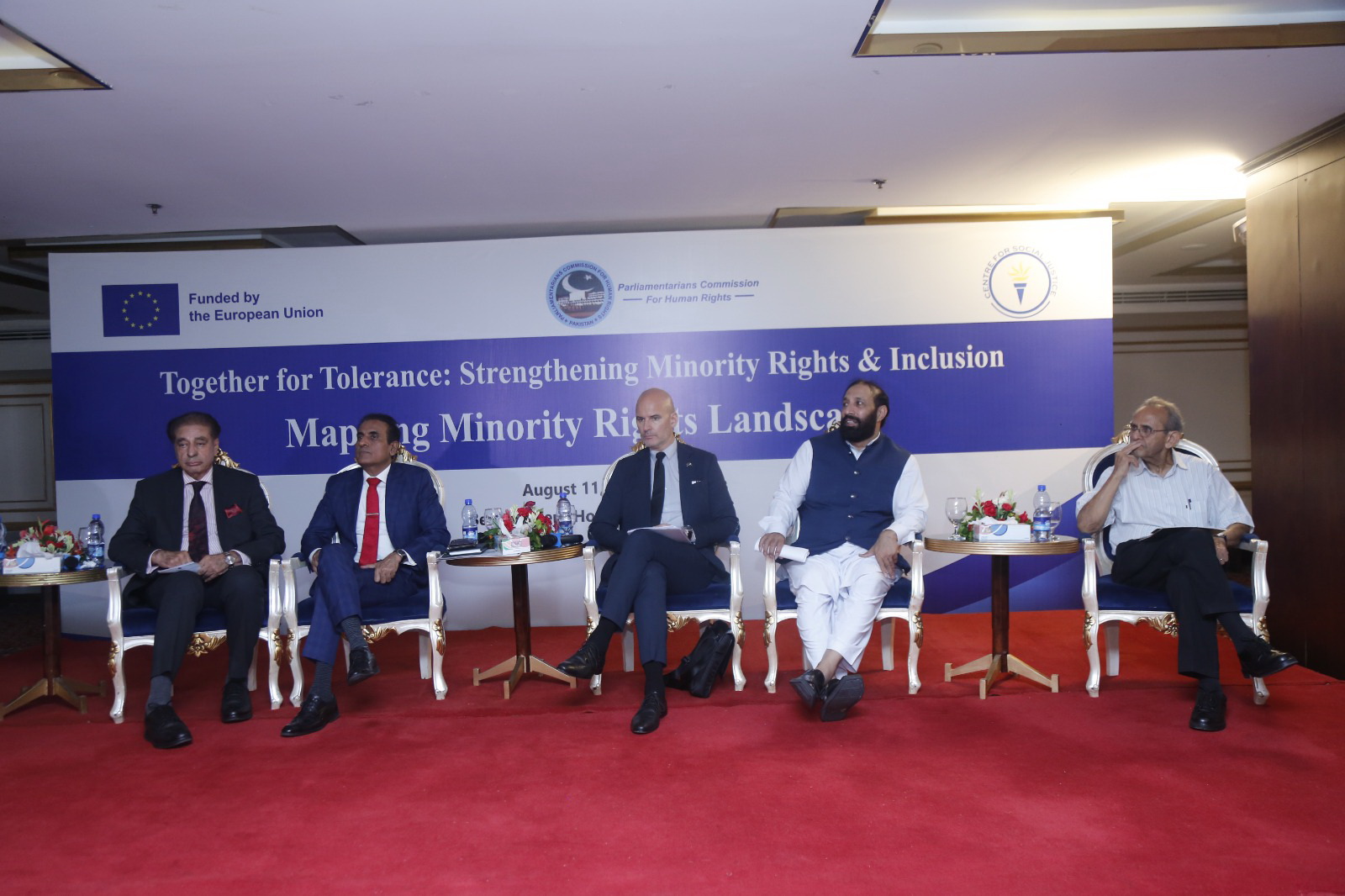
Despite constitutional guarantees and international commitments, the rights of Pakistan’s religious minorities remain unfulfilled, speakers said at a National Minority Day seminar organized by the Parliamentarians Commission for Human Rights (PCHR) in Islamabad.
The event shared preliminary findings of two EU-funded studies mapping implementation of minority-specific policies in Punjab and Sindh.
The studies, conducted under the Together for Tolerance project with the Centre for Social Justice as co-partner, found rising forced conversions—especially of minor Hindu and Christian girls—attacks on religious sites, tokenistic political representation, and persistent discrimination in jobs, education, housing, and healthcare. Over 70% of quota jobs for minorities remain unfilled, 44% of minority children in Sindh are out of school, and 60% of minority students report discrimination. In Punjab, 1.9 million children, many from minority families, are engaged in labour.
Speakers, including PCHR Chairman Riaz Fatyana, Executive Director Shafique Chaudhry, and academic Dr. A.H. Nayyar, urged stronger laws, criminalization of forced conversions, removal of hate content from curricula, and establishment of an independent minority rights commission.
Federal Human Rights Secretary Abdul Khaliq Shaikh said the government is committed to reforms in line with the vision of Pakistan’s founder and the 2014 Supreme Court ruling on minority rights, citing a proposed bill to establish a National Commission on the Rights of Religious Minorities. EU Acting Head of Delegation Philipp Oliver Gross stressed that religious freedom is a global EU priority and linked Pakistan’s GSP+ trade benefits to human rights compliance.
The seminar concluded with calls from parliamentarians and civil society for both legal and attitudinal change to protect minorities.